


Table of Contents
- Why Sterling Silver Turns Skin Green
- Is Green Skin a Sign of Fake Silver?
- Is 925 Sterling Silver Hypoallergenic?
- How to Prevent Jewelry From Turning Skin Green
- How to Clean Sterling Silver Jewelry and Green Stains
- Better Materials for Sensitive Skin
- Conclusion
- Frequently Asked Questions
Last Updated: September 15, 2026
Why Sterling Silver Turns Skin Green
Yes, sterling silver can turn skin green, and the reason has nothing to do with the silver being fake. This guide from Flogaze explains the chemistry behind the discoloration, how to prevent it, and what it means for your jewelry collection.
The green mark comes from a chemical reaction, not from the silver itself. Fine silver does not react with skin. Sterling silver is an alloy, and the metals mixed into it are what cause the color transfer.
The Copper in 925 Sterling Silver
925 sterling silver is 92.5% pure silver mixed with 7.5% other metals, usually copper (What is sterling silver?). That copper is the culprit behind green skin.
When copper meets moisture, sweat, and sulfur compounds in the air, it oxidizes (pubmed.ncbi.nlm.nih.gov). The resulting compounds, copper salts, transfer to your skin and leave a green or black stain. This is copper oxidation, and it is a normal chemical process, not a defect.
The sterling silver purity standard of 92.5% has been used for centuries because pure silver is too soft for everyday jewelry. Copper adds hardness and durability. The trade-off is that copper is reactive.
How Your Body Chemistry Plays a Role
Your body chemistry determines how much green staining you see. Two people can wear the same ring and get completely different results.
Acidic sweat accelerates the reaction. If your skin has a lower pH, meaning more acidic, the copper oxidizes faster. pH levels vary from person to person based on diet, genetics, and even stress.
Other factors that increase discoloration:
- High humidity and heat
- Perfumes, lotions, and cosmetics
- Medications that change sweat composition
- Individual skin sensitivity to metal ions
Is Green Skin a Sign of Fake Silver?
Watching sterling silver turn skin green is not a reliable sign of fake silver. Real 925 sterling silver contains copper, and copper causes green marks. A piece that never discolors might actually be stainless steel or plated base metal.
That said, excessive or immediate greening can indicate a lower silver content. Jewelry stamped "sterling" or "925" must meet the 92.5% standard. If a piece turns your finger bright green within hours and feels unusually heavy or dark, it may contain more base metal than advertised.
The honest test is a jeweler's assessment, not the color of your skin. A professional can verify sterling silver purity with acid testing or a spectrometer.
Is 925 Sterling Silver Hypoallergenic?
925 sterling silver is not truly hypoallergenic. The copper and other alloy metals can trigger reactions in people with metal allergy or skin sensitivity.
Hypoallergenic means a metal is unlikely to cause an allergic reaction (the American Academy of Dermatology). Pure silver, gold, platinum, and titanium fit this description. Sterling silver does not, because of its copper content.
Symptoms of a genuine reaction include:
- Redness or rash at the contact point
- Itching or burning
- Blisters or peeling skin
These differ from simple green staining, which is cosmetic and harmless. A dermatological reaction needs medical attention; a green mark does not.
If you have known metal sensitivities, rhodium plating or a protective coating can create a barrier between the copper and your skin. Many jewelers offer this service.
How to Prevent Jewelry From Turning Skin Green
You can prevent green skin with a few consistent habits. The goal is to reduce contact between your skin's moisture and the copper in the alloy, and to control the environmental triggers that accelerate the reaction.
Preventative measures that work:
- Apply lotion, perfume, and sunscreen before putting on jewelry, not after
- Remove rings and bracelets before washing hands, swimming, or exercising
- Keep jewelry dry and store it in an airtight container
- Choose pieces with rhodium plating or a clear jewelry sealant
- Switch to stainless steel or titanium for daily-wear items
Environmental Triggers That Speed Up Oxidation
Most guides blame sweat and stop there. The environment around your jewelry matters just as much.
- Humidity: High humidity keeps a thin film of moisture on the metal surface, which is exactly what copper needs to oxidize. In humid climates, staining appears faster and tarnish builds between wearings.
- Swimming pool chlorine: Chlorine is a strong oxidizer. A single swim can strip a protective coating and leave copper exposed. Pool water also leaves residue in crevices that keeps reacting after you dry off.
- Hot tubs and saltwater: Both accelerate the same reaction. Saltwater is especially aggressive because chloride ions attack the metal surface directly.
- Household cleaning chemicals: Bleach, ammonia, and acidic bathroom cleaners are the worst offenders. Even the fumes from a closed cabinet can tarnish silver stored nearby.
- Sunscreen and insect repellent: Both leave reactive films on the metal that hold moisture against the surface.
If you cannot remove your jewelry before exposure, rinse and dry it immediately afterward. Do not let pool water or cleaner residue sit on the metal.
Protective Barrier Solutions: What Actually Works
Protective barrier solutions physically block the copper from touching your skin. There are three main approaches, and each has real trade-offs.
Clear nail polish (DIY)
- How it works: A thin coat over the inside of a ring or the back of a pendant creates a physical barrier.
- Pros: Cheap, fast, available anywhere, easy to reapply.
- Cons: It chips and peels within days to weeks on high-contact pieces. It looks uneven up close. It can trap moisture underneath if applied over a dirty surface, which makes tarnish worse. It is a short-term fix, not a solution.
Jewelry sealant (purpose-made)
- How it works: A clear lacquer formulated for metal. Applied in thin coats and allowed to cure.
- Pros: Lasts longer than nail polish, dries clearer, and is designed not to yellow. Reapply every few months.
- Cons: Still a wear item. High-friction pieces like rings need more frequent reapplication. It must be removed before professional polishing.
Rhodium plating (professional)
- How it works: A jeweler electroplates a thin layer of rhodium, a platinum-family metal, over the silver.
- Pros: The most durable barrier. Resists tarnish and skin reactions. Gives silver a bright white finish.
- Cons: Costs more, requires a jeweler, and wears down over time. Expect to replate every year or two with regular wear. Once worn through, the copper is exposed again.
| Solution | How It Works | Best For | Realistic Lifespan |
|---|---|---|---|
| Clear nail polish | DIY coating blocks copper | Occasional-wear pieces, quick fix | Days to weeks |
| Jewelry sealant | Purpose-made clear lacquer | Rings and pendants, moderate wear | A few months |
| Rhodium plating | Electroplated metal layer | Daily-wear rings, high-value pieces | 1-2 years |
| Stainless steel | No copper in the alloy | Sensitive skin, everyday use | Permanent |
| Titanium | Inert, non-reactive metal | Severe metal allergies | Permanent |
Matching the Fix to the Wearer
If you green up within hours, DIY barriers will frustrate you, you will be reapplying constantly. Go straight to rhodium plating or switch the piece to stainless steel or titanium.
If you only see marks after a long, hot day, a jewelry sealant and a habit of removing your ring before washing hands may be enough.
For people who react strongly, the simplest fix is switching materials. Stainless steel, titanium, and 14K or higher gold avoid copper entirely.
How to Clean Sterling Silver Jewelry and Green Stains
Cleaning removes existing tarnish and green residue from both your jewelry and your skin. Most of what you need is already in your kitchen.
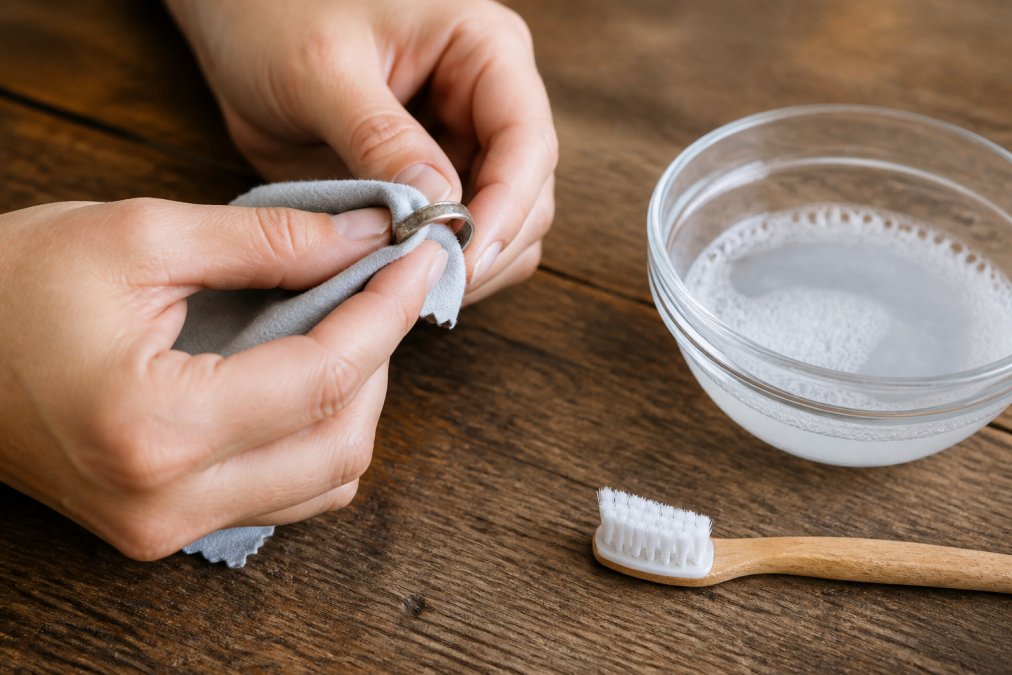
To clean green stains from your skin, wash the area with mild soap and warm water. A gentle scrub with a soft cloth removes most green residue. For stubborn marks, a paste of baking soda and water works well. Avoid harsh scrubbing, which irritates skin.
To clean tarnished jewelry:
- Line a bowl with aluminum foil, shiny side up
- Add warm water and a tablespoon of baking soda
- Place the silver in the bowl for 2-3 minutes
- Rinse with water and dry with a polishing cloth
For light tarnish, a polishing cloth alone often does the job.
Better Materials for Sensitive Skin
Conclusion
Frequently Asked Questions
Is my sterling silver real if it turns my skin green?
Yes. A green mark does not mean your jewelry is fake. Real 925 sterling silver contains 7.5% copper, and that copper reacts with sweat, lotions, and acids on your skin to create a green residue. In fact, a green stain often confirms the piece is genuine sterling silver rather than a plated or stainless steel item. Check for a 925 stamp to be sure.
How do I keep sterling silver from turning my skin green?
Apply lotion, perfume, and sunscreen before putting on your jewelry, not after. Wipe pieces with a soft cloth after wearing them, and keep them in an airtight bag between uses. A thin rhodium plating or clear jewelry sealant adds a barrier between the metal and your skin. On humid days, remove rings before workouts or dishwashing since moisture speeds up the reaction.
Does 925 sterling silver turn green?
It can. The 925 stamp means the piece is 92.5% pure silver and 7.5% copper. Copper oxidizes when it contacts moisture, sulfur compounds, and acidic sweat, which produces the green or black film you see on skin and jewelry. The tarnish is a surface reaction, not damage to the metal itself, and it comes off with routine cleaning.
What type of silver doesn't turn skin green?
Fine silver (99.9% pure) has almost no copper, so it rarely leaves a green mark, though it scratches and dents easily. Rhodium-plated sterling silver and stainless steel are also strong options for sensitive skin. If you want sterling silver with the sentimental look, choose pieces with a rhodium finish and clean them regularly to keep the barrier intact.


