


Table of Contents
- Understanding 925 Sterling Silver and Purity Stamps
- Sterling Silver vs 925 Silver Difference Explained
- Visual Inspection: Hallmarks, Maker's Marks, and Stamps
- Testing Silver with a Magnet and the Cloth Test
- The Sound Test and Weight Evaluation
- Chemical Testing and Safety Precautions
- Distinguishing Silver from Stainless Steel and Other White Metals
- When to Seek Professional Jewelry Appraisal
- Frequently Asked Questions
Last Updated: September 18, 2026
Understanding 925 Sterling Silver and Purity Stamps
925 sterling silver is an alloy made of 92.5% pure silver and 7.5% other metals, typically copper. This blend creates jewelry that's durable enough for everyday wear while maintaining the lustrous appearance of precious metal, which is why learning to identify real 925 sterling silver matters for any buyer. The remaining 7.5% strengthens the silver, preventing it from becoming too soft to hold a shape or resist scratching.
Pure silver alone is too malleable for jewelry; the copper content gives sterling silver the strength to withstand constant use without bending or denting.
A purity stamp (also called a hallmark) is the manufacturer's guarantee of this composition. On authentic pieces, you'll find "925," "Sterling," or "Ster" stamped into the metal. This mark tells you what you're buying.
Sterling Silver vs 925 Silver Difference Explained
Sterling silver and 925 silver are the same thing. The term "sterling" comes from medieval England and refers to the 92.5% purity standard used for centuries.
Other silver alloys exist: silver-plated items have only a thin coating over base metal, while silver-filled jewelry contains more silver than plating but less than sterling.
When comparing sterling silver vs other white metals, the difference becomes clearer:
- Sterling silver: 92.5% pure silver, develops patina and tarnish over time
- Silver-plated: Thin silver layer over base metal, plating wears off with use
- Stainless steel: Durable white metal with no silver content, resists tarnish completely
- White gold: Precious metal alloy, significantly more expensive than sterling
Visual Inspection: Hallmarks, Maker's Marks, and Stamps
Checking for Authentic Hallmarks
Real 925 sterling silver jewelry carries a hallmark, an official stamp indicating purity. In the US, look for "925," "Sterling," "Ster," or "STG" stamped directly into the metal.
Authentic hallmarks are crisp and clear; counterfeit pieces often have shallow, uneven stamps. Run your finger over the mark, real hallmarks feel sharp and precise.
Understanding Hallmark Variations and International Marks
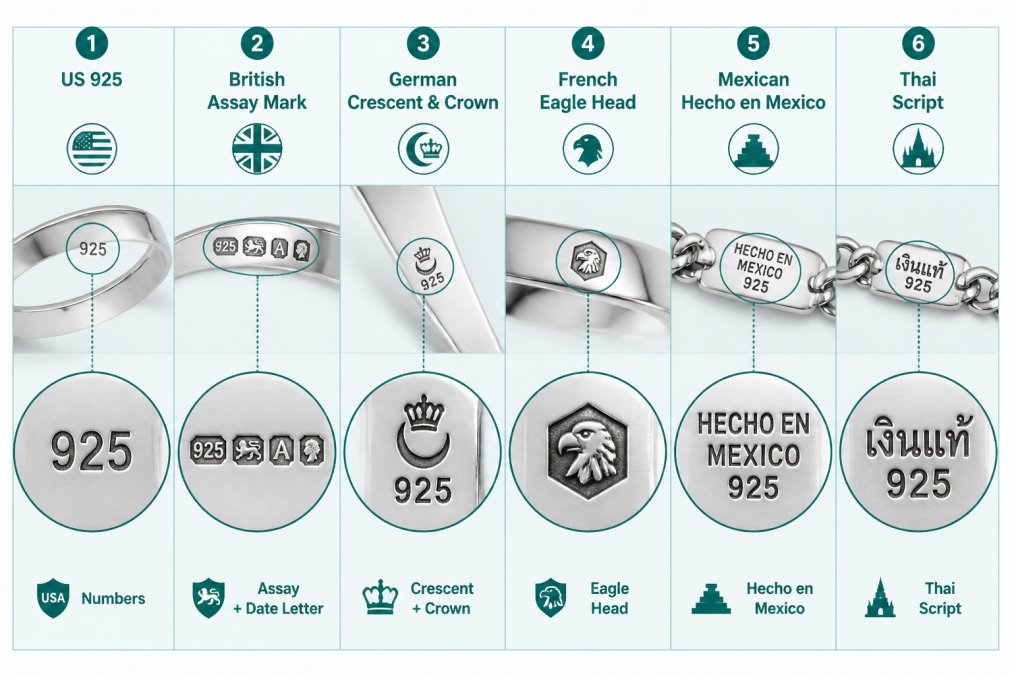
Hallmarks vary significantly depending on where the piece was made. Recognizing these variations prevents you from dismissing authentic pieces as fake:
United States hallmarks: "925" or "Sterling" (most common), often with maker's initials or company name. No government assay mark required; manufacturers are responsible for accurate marking.
European hallmarks: British marks include purity number plus maker's mark and date letter. German pieces show "925" with crescent moon and crown. French hallmarks feature an eagle head. Italian pieces display "925" with maker's mark.
Using Hallmark Databases and Lookup Resources
Maker's mark databases: Organizations like the British Hallmarking Council maintain searchable databases. Photograph the mark to trace the maker and verify origin.
Identifying Tarnish and Oxidation Patterns
Real sterling silver develops tarnish and oxidation over time, a natural chemical reaction forming silver sulfide (pubmed.ncbi.nlm.nih.gov). Authentic pieces show tarnish patterns following the metal's contours, appearing first in crevices. Counterfeit silver-plated items show uneven tarnish or reveal base metal underneath. Well-maintained, polished pieces may appear bright, so absence of tarnish alone isn't conclusive.
Maker's Marks and Authentication
Maker's marks identify the craftsperson or company and are separate from purity stamps. Legitimate makers register marks with assay offices or use consistent symbols. Counterfeit marks are often generic or poorly executed. If you trace a mark to a real maker, that's strong evidence of authenticity.
Testing Silver with a Magnet and the Cloth Test
Why Nonmagnetic Properties Matter
Sterling silver is nonmagnetic. Hold a strong magnet near the piece, if it sticks, the item contains ferrous metals and isn't genuine. However, some counterfeit base metals are also nonmagnetic, so this test is an elimination tool only: magnetic = definitely not sterling silver.
The Rubbing and Cloth Test for Real Silver
To identify real 925 sterling silver, rub the piece gently with a soft, light-colored cloth. Real sterling silver leaves a black or gray mark as tarnish transfers. Silver-plated items show uneven marks or reveal base metal color. Genuine sterling silver marks appear consistent and dark. This test works best on older pieces; newly polished silver may not leave a mark.
The Sound Test and Weight Evaluation
Real sterling silver produces a distinct ringing sound when tapped lightly with a coin or spoon, the tone is bright and sustains for several seconds. Counterfeits produce a duller, shorter tone. Weight is another indicator: silver is relatively dense, so unusually light pieces may be plated. Compare weight to similar authentic pieces. However, weight alone isn't conclusive; combine it with other tests.
Chemical Testing and Safety Precautions
Nitric Acid Testing Kit Basics
A nitric acid test is the most definitive home verification method. Real sterling silver produces a milky white or cloudy appearance; silver-plated and stainless steel items show different reactions. Place a small drop on an inconspicuous area and compare the result to the kit's color chart. The reaction happens within seconds.
Safe Handling and Realistic Risk Assessment
Nitric acid is corrosive and dangerous, wear protective gloves and eye protection, work outdoors or in well-ventilated areas, and keep it away from children and pets. The acid will permanently mark the metal surface with visible discoloration or etching, even on successful tests. This damage is irreversible.
Decision Framework: When to DIY Test vs. Seek Professional Appraisal
Use DIY chemical testing if: the piece is inexpensive (under $100), you're testing a bulk lot, it has no sentimental value, or it's already damaged.
Professional testing advantages:
- Uses X-ray fluorescence (XRF) or other non-destructive methods that don't damage the piece
- Provides written documentation of purity and composition
- Identifies repairs, plating, or alterations that affect value
- Offers insurance-grade certification if needed
- Takes 24-48 hours typically, costs $25-$75 depending on complexity
- Protects high-value pieces from irreversible damage
When Chemical Testing Makes Sense
Chemical testing is most practical when you're screening multiple pieces of unknown origin and low individual value. For example, if you inherit a box of costume jewelry and want to identify which pieces contain genuine silver, a testing kit lets you quickly sort through the collection without paying per-piece appraisal fees.
Combining Multiple Tests for Confidence
If you decide to use a chemical test, don't rely on it alone. Combine it with non-destructive methods first:
- Check the hallmark and verify it against known maker's marks or assay office records
- Perform the magnet test (nonmagnetic = good sign)
- Observe tarnish patterns and oxidation (authentic silver shows natural patina)
- Use the cloth test (real silver leaves a dark mark)
- Only then, if you need absolute certainty and the piece is low-value, use the acid test
Distinguishing Silver from Stainless Steel and Other White Metals
Stainless steel and sterling silver look similar but behave very differently. Stainless steel is a steel alloy that resists tarnish and corrosion almost completely. Sterling silver develops patina and requires regular cleaning.
Here's how to tell them apart:
- Magnet test: Stainless steel is often magnetic; sterling silver is not
- Tarnish: Stainless steel stays bright indefinitely; sterling silver darkens over time
- Weight: Sterling silver feels heavier than stainless steel for the same size
- Price: Stainless steel costs less than sterling silver
- Hallmark: Stainless steel is marked "SS" or "Stainless Steel," not "925"
When to Seek Professional Jewelry Appraisal
If you're uncertain about a piece's authenticity after home testing, a professional jeweler or appraiser can provide definitive answers. Professional testing uses equipment that's more accurate and safer than home kits.
A certified appraiser can:
- Perform precise purity testing without damaging the piece
- Identify the metal composition with certainty
- Assess the piece's value for insurance purposes
- Detect repairs or alterations that affect authenticity
Frequently Asked Questions
What does the 925 stamp actually mean on jewelry?
The 925 stamp indicates that the piece contains 92.5% pure silver and 7.5% other metals, typically copper. This purity level defines sterling silver. The stamp is an official hallmark that assay offices use to certify authenticity. Without this marking, you cannot verify the piece meets sterling silver standards. Always check for this stamp on the interior of rings, clasps, or less visible areas of jewelry.
Will a magnet stick to 925 sterling silver?
No. Real 925 sterling silver is nonmagnetic, so a magnet will not stick to it. If a magnet pulls strongly toward your jewelry, it contains iron or is primarily base metal with only a thin silver plating. This is one of the quickest home tests to identify counterfeits. Use a strong neodymium magnet and test on an inconspicuous area. Silver-plated items over steel bases may show slight magnetic attraction.
Can fake silver say 925 on it?
Yes. Counterfeiters frequently stamp fake 925 marks on silver-plated or base metal pieces to deceive buyers. This is why the stamp alone is not enough, you must combine it with other tests like the magnet test, weight evaluation, and visual inspection. Check the quality of the engraving itself; authentic hallmarks are crisp and evenly stamped. Poorly executed stamps or shallow engravings are red flags for counterfeits.
How can I test if my silver is real or fake at home?
Start with visual inspection: look for the 925 hallmark and check for tarnish patterns typical of real silver. Next, use the magnet test, real silver is nonmagnetic. Then try the sound test by gently dropping the piece on a hard surface; genuine silver produces a clear, ringing tone. The rubbing test with a soft cloth can reveal if the piece tarnishes naturally over time. For high-value items, combine these tests and consider professional appraisal to confirm authenticity.


