


Table of Contents
- Why Traditional Charm Bracelets Fail at Daily Wear
- Durable Alternatives to Traditional Charm Bracelets: A Comparison
- Durable Personalized Jewelry Materials That Withstand Wear
- What to Look For: Clasps, Links, and Construction
- How to Clean Stainless Steel Jewelry for Lasting Shine
- Alternatives for Sensitive Skin: Hypoallergenic Options
- Final Thoughts: Choosing a Bracelet That Lasts
- Frequently Asked Questions
Last Updated: September 5, 2026
Why Traditional Charm Bracelets Fail at Daily Wear
Traditional charm bracelets are delicate keepsakes, not everyday accessories. The thin chains, hollow links, and spring-ring clasps that define classic charm systems are engineered for occasional wear.
The core problem is construction. Most traditional bracelets rely on hollow or semi-hollow links that prioritize lightness over structural integrity. Over time, the constant micro-flexing of daily movement creates metal fatigue, and the clasp, often the weakest point, wears out first.
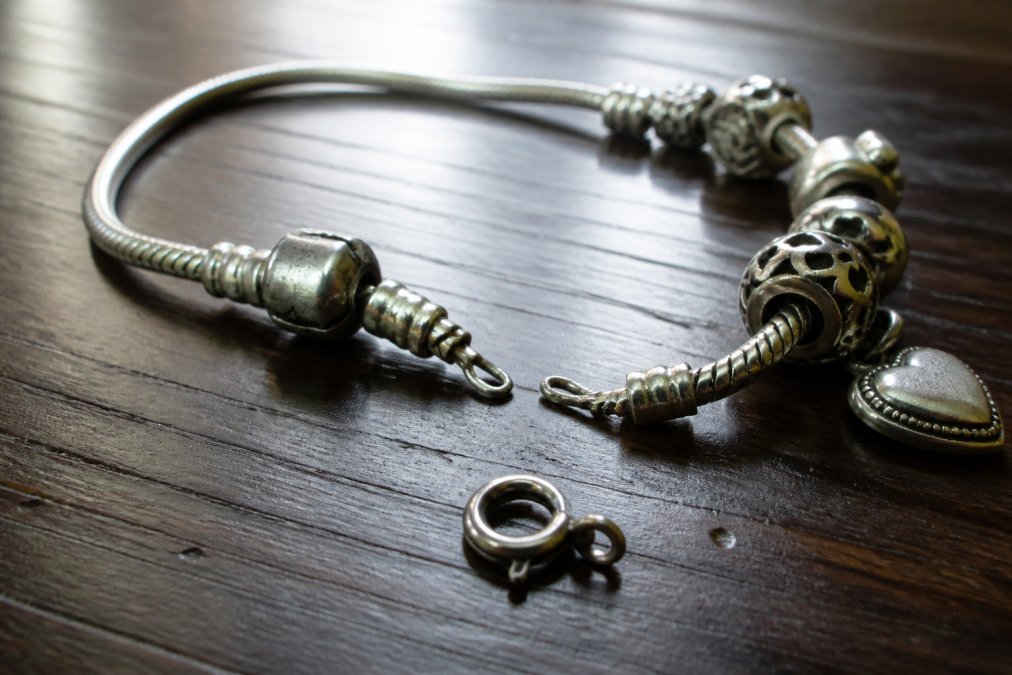
If you want a bracelet that holds up to daily wear, the material and the link system matter more than the brand name stamped on the clasp.
Durable Alternatives to Traditional Charm Bracelets: A Comparison
The market now offers several categories of durable alternatives to traditional charm bracelets, each with a different trade-off between customization, durability, and cost.
| Option | Material | Customization | Best For |
|---|---|---|---|
| Stainless Steel Permanent Bracelets | High-grade steel | Low | Low-maintenance, wear-24/7 lifestyles |
| Modular Sterling Silver Systems | Solid silver | High | Collectors who swap charms often |
| Minimalist Solid Metal Cuffs | Steel or gold-filled | Low to moderate | Minimalist, modern aesthetics |
Stainless Steel Permanent Bracelets
Permanent bracelets, such as the PermaLinx by JBloom, are welded or clamped around the wrist and designed to stay on indefinitely. Constructed from high-grade stainless steel, they are waterproof, sweat-proof, and scratch-resistant, meaning you never remove them for a shower, a swim, or a workout. The absence of a clasp eliminates the most common failure point on traditional bracelets.
The trade-off is sizing: because there is no clasp, fitting requires either professional application or a specific tool to remove and resize the piece.
Modular Sterling Silver Systems
For those who still want the charm-collecting experience, modular systems offer a more durable alternative to traditional charm bracelets. Brands like Trollbeads use solid sterling silver chains with a threaded or locking system, paired with handcrafted glass, silver, and gold beads. The construction is heavier and the clasps are substantially more secure than mass-market charm bracelets.
The real advantage is repairability: if a link or bead is damaged, you replace that single component rather than the entire bracelet. The downside is cost, as collections can grow expensive as you add beads over time.
Minimalist Solid Metal Cuffs
A solid cuff bracelet offers the simplest answer: no chain, no links, no clasp. A single piece of formed metal, such as the Caligio Infinity Bracelet, relies on its own structural rigidity to stay on the wrist. With a secure locking mechanism and high-durability metal construction, there are no moving parts to fail.
Cuffs are the best choice for a minimalist, modern aesthetic. The limitation is obvious: you cannot add charms. Personalization is limited to engraving or the finish of the metal itself.
Durable Personalized Jewelry Materials That Withstand Wear
The single biggest factor in bracelet longevity is the material. Understanding the difference between plating, filling, and solid construction will save you from a piece that deteriorates quickly.
When evaluating durable personalized jewelry materials, prioritize solid construction over plated alternatives. Here is how the common options stack up:
- Stainless steel: The most practical daily-wear metal. It is tarnish-resistant, hypoallergenic, and does not require polishing. It is heavier than silver but nearly indestructible for jewelry purposes.
- Sterling silver: Softer than steel and prone to tarnishing, but solid 925 silver is repairable and can last a lifetime with proper care. Look for pieces with substantial weight, not thin, flimsy stampings.
- Gold-filled: A thick layer of gold mechanically bonded to a base metal. This is far more durable than gold plating and will not flake or wear off with normal use.
- Gold plate: A thin layer of gold over base metal. This is the least durable option and will wear through within months of daily wear, regardless of how careful you are.
The Gemological Institute of America notes that gold-filled jewelry has a layer of gold that is much thicker than standard plating, making it suitable for pieces worn on a daily basis. For personalized pieces, engraving on solid steel or silver will remain crisp for years, whereas engraving on plated metals can become a focal point for wear and corrosion.
What to Look For: Clasps, Links, and Construction
Durable alternatives to traditional charm bracelets stand or fall on three structural elements: the clasp, the links, and the overall construction. A bracelet is only as strong as its weakest point, and in most traditional pieces, that is the clasp.
Clasp security and metal fatigue. Spring-ring clasps fail through a specific mechanism: the thin wire work-hardens as it flexes. Each open-and-close cycle bends the wire past its elastic limit, and after roughly 500 to 1,000 cycles, micro-cracks propagate until the ring snaps. A lobster clasp with a thicker gauge wire distributes the same stress across a larger cross-section, delaying fatigue. Box clasps with double safety locks are the most secure. When evaluating a clasp, pinch it and pull sideways, a quality clasp will not flex more than a millimeter.
Link integrity under load. The weight-to-durability ratio is the most overlooked factor in bracelet longevity. A traditional bracelet with hollow links might weigh 8 grams, but adding six solid silver charms can add 15 to 20 grams of load. That load concentrates at the link closest to the clasp and at the jump rings. Hollow links will ovalize and eventually crack at the solder joint under this sustained tension. Solid links deform elastically and return to shape. A simple field test: hold the bracelet horizontally and bounce it gently in your palm. A hollow-link bracelet will feel springy; a solid-link bracelet will feel dense and will not flex perceptibly.
Attachment points: the real failure zone. Most charm loss happens at the attachment point, not through link breakage. Traditional bracelets use split rings or open jump rings that are twisted open to slide charms on. Every twist work-hardens the ring metal, and the gap never fully closes, leaving a micro-gap that catches on fabric and gradually widens. Modular systems like Trollbeads use threaded posts with a locking collar that requires a specific tool to open. The principle is the same: the attachment mechanism must be closed by a deliberate, tool-assisted action.
Soldered versus pressed construction. Examine the links where they join the clasp. A link that is soldered closed is effectively a single piece of metal. A link that is merely pressed or crimped has a mechanical joint that can separate under repeated flexing. To test, run your fingernail along the inside of a link; if you feel a seam or a ridge, it is pressed. Soldered links are smooth to the touch. High-end modular systems solder every link closed before threading charms, which is why they survive decades of wear.
A practical weight budget. As a rule of thumb, the combined weight of your charms should not exceed the weight of the bracelet base itself. A 12-gram solid silver chain can comfortably carry up to 12 grams of charms before the links begin to show strain. If you plan to build a large collection, choose a base bracelet that is 20 grams or heavier, or switch to a cuff design.
How to Clean Stainless Steel Jewelry for Lasting Shine
Stainless steel is one of the lowest-maintenance jewelry materials available, but it still benefits from periodic cleaning to remove oils, dirt, and residue that dull its finish.
The process is simple and requires no special chemicals. Mix a few drops of mild dish soap into a bowl of warm water. Soak the bracelet for a few minutes, then gently scrub with a soft-bristled brush, such as a baby toothbrush. Pay attention to crevices where links meet and where charms attach. Rinse thoroughly and dry immediately with a soft, lint-free cloth. For stubborn spots, a small amount of rubbing alcohol on a cotton pad will lift residue. Avoid abrasive polishes or scrub pads.
Why stainless steel is different. Unlike sterling silver, which tarnishes through a chemical reaction with sulfur in the air, stainless steel does not oxidize. The chromium in the alloy forms a passive oxide layer that is self-repairing, when you scratch the surface, the chromium reacts with oxygen to reform the protective layer. This means you never need to polish it to restore its finish.
What cleaning reveals about wear. When you clean a stainless steel bracelet, inspect it under good light. Look for three things: scratches on the surface, any play between links, and the condition of the clasp mechanism. Surface scratches are cosmetic and can be buffed out, but they do not compromise structural integrity. Play between links, where two links move more than a millimeter against each other, indicates that the pin or connector inside is wearing. On modular systems, this is a sign that you should replace the worn link before it fails completely. On the clasp, check that the spring mechanism still returns firmly; if it feels mushy, the clasp should be replaced.
Repairability as a maintenance strategy. The most durable bracelet is not the one that never needs repair, it is the one that can be repaired. Traditional charm bracelets are often assembled with soldered jump rings that must be cut open to remove a damaged link, which destroys the link in the process. Modular systems are designed for service: a worn bead or link can be unscrewed and replaced in under a minute with the correct tool. When you buy a bracelet, ask whether the manufacturer sells individual replacement links or clasps. If they do not, the entire bracelet becomes disposable when a single component fails.
Seasonal deep cleaning. For a bracelet worn daily through workouts and hand-washing, a weekly rinse is sufficient. But once a season, do a deeper clean: remove all charms (if your system allows), soak the chain and each charm separately in warm soapy water, and scrub each piece individually. This prevents the buildup of dead skin cells and lotion in the crevices. After drying, apply a tiny drop of mineral oil to a cloth and wipe the clasp mechanism to keep the spring lubricated. Do not use WD-40 or silicone sprays; they leave a residue that attracts dirt.
Alternatives for Sensitive Skin: Hypoallergenic Options
Skin sensitivity is a common reason people abandon traditional charm bracelets. Many inexpensive bracelets contain nickel, a common allergen that causes redness, itching, and rashes. Fortunately, durable alternatives are often made from naturally hypoallergenic materials.
The safest choices are stainless steel, solid sterling silver, and gold-filled metals. Surgical-grade stainless steel, often used in body piercings, is specifically designed to be biocompatible and is the most reliable option for sensitive skin. Look for terms like "316L" or "surgical steel" to verify the grade. Brands like LONAGO offer solid 925 sterling silver pieces that are hypoallergenic and accessible, while Lily Charmed focuses on solid precious metals with ethically sourced materials.
If you have metal allergies, avoid gold plating entirely. The base metal underneath is often a nickel alloy, and once the plating wears through, the allergic reaction begins. Gold-filled and solid metals eliminate this risk because the metal itself is inert.
Final Thoughts: Choosing a Bracelet That Lasts
The best bracelet is the one you never have to take off. Whether you choose a permanent stainless steel cuff, a modular silver system, or a solid metal piece with a secure clasp, the principles remain the same: solid construction, quality materials, and a design that withstands real life.
At Flogaze, we build personalized pieces with this philosophy in mind. Our stainless steel construction is designed to withstand constant use, making our bracelets ready for daily wear without the worry of tarnishing or breakage. Whether you are commemorating an anniversary, a graduation, or a family milestone, our pieces are crafted to remain a cherished part of your journey for years to come, and each purchase arrives in a gift box ready for direct presentation.
Frequently Asked Questions
Are charm bracelets out of fashion?
No, charm bracelets remain popular, but the trend has shifted toward more durable materials and modern designs. Traditional silver bracelets with delicate clasps are being replaced by stainless steel options and permanent bracelets that don't require daily removal. The charm concept still works for personalization; it's the construction that has evolved. Look for modular systems with secure threading or solid metal cuffs with engraved details if you want a current look that also survives daily wear.
What are the most durable materials for everyday jewelry?
Stainless steel is the most durable material for everyday jewelry because it resists scratches, water damage, and tarnish without special care. Solid 925 sterling silver is another strong option, but it requires occasional cleaning to prevent tarnishing. Gold-filled and 14k gold offer durability for those who prefer warm tones. Avoid plated metals or soft gold, which show wear quickly. For personalized pieces, confirm the base material is solid rather than hollow before purchasing.
How do I maintain the durability of my personalized jewelry?
To maintain durability, remove your bracelet during heavy physical activity or exposure to harsh chemicals like chlorine. Clean stainless steel jewelry with warm water and mild dish soap, using a soft cloth to dry. For sterling silver, use a polishing cloth designed for silver to prevent tarnish buildup. Check clasps and links monthly for signs of weakness. Store pieces separately to prevent scratches. These steps preserve structural integrity and keep engravings looking sharp for years.
Can stainless steel jewelry be used for personalized charms?
Yes, stainless steel is an excellent choice for personalized charms. It resists tarnish, water damage, and scratching, making it ideal for engravings that need to stay legible. Many brands now offer stainless steel bead systems and engraved pendants that attach to durable chain bracelets. Unlike sterling silver, stainless steel requires almost no maintenance and holds up to daily wear, showers, and sweat. This makes it a practical choice for active individuals who don't want to remove their jewelry.
Choosing a bracelet that lasts means prioritizing material and construction over fleeting trends. The options above give you a clear path to a piece that holds both sentiment and structure. Explore Flogaze's collection of personalized stainless steel bracelets and find a keepsake designed for the life you actually live. Get started with Flogaze and find a bracelet built to stay.
This article was written using GrandRanker


