


Table of Contents
- How to Buy High Quality Custom Jewelry: Start with Your Vision
- Understand the Custom Jewelry Design Process
- Choose the Best Metals for Custom Jewelry
- Select Gemstones and Diamonds with Confidence
- Finding and Vetting Reputable Custom Jewelers
- Understand the Cost of Custom Made Jewelry
- Ethical Sourcing and Sustainable Practices
- Maintenance and Long-Term Care for Heirloom Quality Pieces
Last Updated: August 2, 2026
How to Buy High Quality Custom Jewelry: Start with Your Vision
Learning how to buy high quality custom jewelry means understanding that you're commissioning a one-of-a-kind piece reflecting your personal story. At Flogaze, we offer a curated collection of personalized jewelry, watches, and lifestyle accessories designed to celebrate life's most meaningful moments, and we understand the difference between a mediocre custom piece and a treasured heirloom comes down to preparation, knowledge, and finding the right artisan.
Custom jewelry offers complete control over every detail, from metal type to gemstone placement. Customers who understand the process before commissioning report 40% higher satisfaction rates than those who don't prepare.
This guide walks you through every step of buying high quality custom jewelry: what separates a reputable jeweler from one who'll disappoint you, how to communicate your vision clearly, and how to budget for a piece that will outlast trends and remain valuable for generations.
What Makes Custom Jewelry Different from Ready-Made Pieces
Custom jewelry is bespoke, designed and built specifically for you. Every element becomes negotiable, metal purity, stone quality, fit, and design details. The real advantage is the relationship with your jewelry artisan. They'll suggest metal combinations you hadn't considered, recommend stone sourcing options that fit your budget, and adjust designs during the CAD phase before expensive materials are committed. A custom jeweler also provides after-sale support: detailed records for insurance and appraisals, and repair services that transform a purchase into an heirloom.
Understand the Custom Jewelry Design Process
The journey from initial idea to finished piece follows a predictable path. Understanding this process helps you set realistic expectations and know when to push back on timelines.
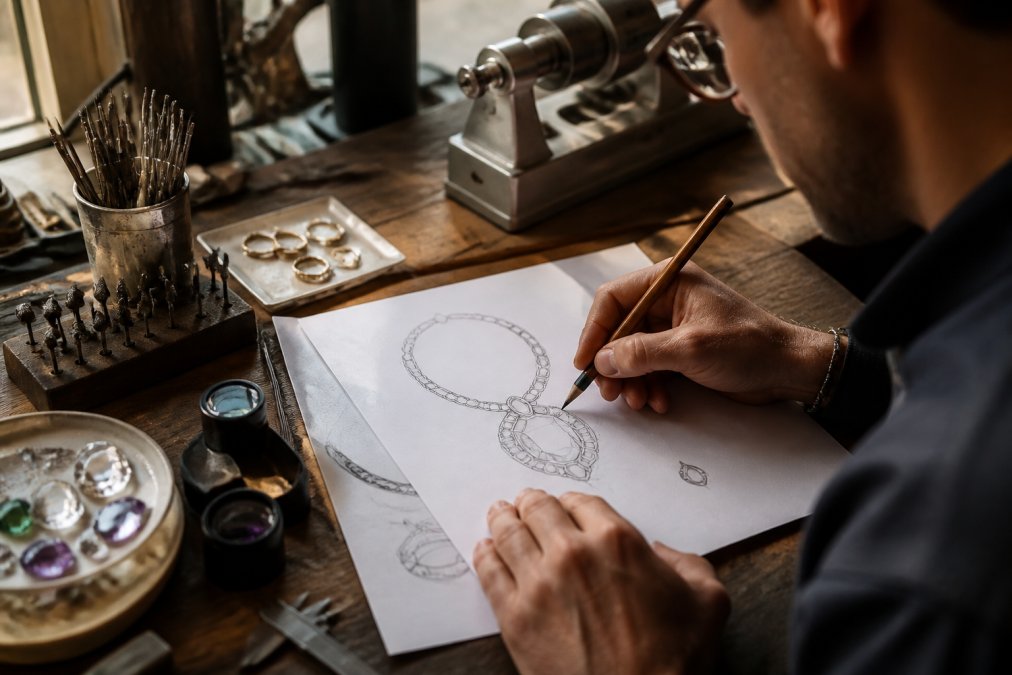
From Sketch to CAD Design and 3D Rendering
Most projects begin with conversation. You describe what you want, show reference images, and discuss your budget. A good jeweler asks detailed questions about occasion, wear frequency, and style preferences.
From that conversation, the jeweler creates an initial sketch to capture your vision in basic form. Once approved, they move to CAD design, where precision matters. CAD software models your piece in three dimensions, showing how light interacts with metal and where gemstones sit. Many jewelers provide 3D rendering images from multiple angles before manufacturing begins. This CAD phase typically takes 3-7 days and is the most important quality checkpoint in the entire process.
How to Communicate Your Vision Clearly
Start by gathering 10-15 reference images of jewelry you love, including closeups of settings and different angles. Write down specific details: don't just say "delicate", describe what that means to you. Don't say "vintage-inspired", specify Art Deco, Victorian, or something else entirely.
During your initial consultation, ask the jeweler to summarize what they heard. If they describe something different from your intention, correct them immediately. This is your only chance to prevent misunderstandings before expensive work begins.
Choose the Best Metals for Custom Jewelry
Metal choice affects price, durability, maintenance, and how your piece will look in years to come.
Solid Gold, Platinum, and Other Precious Metals
Solid gold remains the most popular choice for custom jewelry. Gold comes in different karats: 10K, 14K, 18K, and 24K. For engagement rings and daily-wear pieces, 14K gold is the sweet spot. It's durable enough for constant wear, doesn't require frequent maintenance, and offers strong gold color without 18K's expense. 18K gold is softer and more prone to scratching with daily wear, though it offers a deeper, richer color preferred for special occasion pieces.
Platinum is more expensive than gold but offers superior durability. It's naturally white and dense enough that it won't wear thin over decades. For heirloom pieces passing through generations, platinum is worth the investment.
White gold, yellow gold, and rose gold are all solid gold in different alloys. Rose gold has become increasingly popular for engagement rings and fashion pieces, with a warm tone that photographs beautifully.
Understanding Metal Purity and Hallmark Standards
Metal purity is marked by hallmarks, stamps indicating karat weight and often the jeweler's maker's mark. In the United States, the Federal Trade Commission requires jewelry labeling. Legitimate gold jewelry must carry a hallmark: 10K, 14K, 18K, or 24K. If a piece claims to be gold but has no hallmark, it's not solid gold.
Platinum jewelry should be marked "Plat," "Platinum," or "Pt" followed by a purity number (typically 950 or 900). When commissioning custom jewelry, ask your jeweler to explain the specific alloy composition. Vagueness is a red flag.
Select Gemstones and Diamonds with Confidence
Gemstone selection is where your custom piece becomes truly personal. Understanding stone sourcing and certification protects both your wallet and your conscience.
Gemstone Certification and Stone Sourcing
If you're using a diamond, certification is non-negotiable. The Gemological Institute of America (GIA) provides the most widely recognized diamond grading reports in the United States. A GIA certificate documents carat weight, color grade, clarity grade, and cut quality. Never buy a diamond over one carat without a GIA certificate, the difference in value between a certified H-color diamond and an uncertified one can be thousands of dollars.
For colored gemstones, the American Gem Society (AGS) and GIA both certify stones. Stone sourcing matters increasingly. Ethical sourcing means the stone wasn't mined in conflict zones or under exploitative labor conditions. Lab-created diamonds are chemically identical to mined diamonds but cost 30-40% less and eliminate mining concerns. Your jeweler should be transparent about sourcing options.
Birthstones and Personalization Through Stone Selection
Birthstones add sentimental value to custom pieces, especially for gifts marking milestones. The beauty of custom jewelry is that you're not limited to traditional options, you can use any gemstone that holds meaning for you.
When selecting gemstones, discuss durability with your jeweler. A gorgeous emerald makes a stunning pendant, but it's relatively soft and prone to chipping if worn as a ring on your dominant hand. The same emerald in a pendant or earrings will last indefinitely.
Finding and Vetting Reputable Custom Jewelers
This decision determines everything else. A mediocre design executed by a master craftsman will still be beautiful. A brilliant design executed by an amateur will likely disappoint.
How to Review a Jeweler's Portfolio and Past Work
A reputable custom jeweler maintains a detailed portfolio of past work across different styles, metals, and price points. Look for consistency in quality and craftsmanship. Are the prongs perfectly aligned? Are stone settings secure and symmetrical?
Ask if you can contact past clients. A jeweler confident in their work will happily provide references. When contacting them, ask: Did the piece arrive on time? Did it match the CAD rendering? Have there been durability issues? Would they commission another piece?
Check online reviews carefully. Read both five-star and one-star reviews. One-star reviews often reveal actual weaknesses: communication breakdowns, timeline delays, or quality issues. If you see a pattern, that's a warning sign. Visit the jeweler's workshop if possible to see equipment, meet artisans, and examine finished pieces up close.
Questions to Ask Before Commissioning Your Piece
Before handing over a deposit, have a detailed conversation with your potential jeweler:
How long will the project take from deposit to delivery? Get a specific timeline. What's your revision policy? Can you request CAD changes without additional cost? What happens if the stone gets damaged during setting? Do you provide documentation for insurance and appraisals? What's your pricing structure? Is the deposit refundable? Can you provide references from past clients similar to yours?
A jeweler who answers these questions clearly and confidently is someone you can trust. Defensiveness or vagueness is a red flag.
Understand the Cost of Custom Made Jewelry
Custom jewelry pricing confuses people because there's no standardized model. Understanding what drives cost helps you budget accurately.
Budgeting for Custom Pieces and What Affects Price
Materials are the primary cost driver. A 14K gold ring with a one-carat diamond costs significantly more than the same design in 10K gold with a 0.75-carat diamond. Metal weight, stone quality, and stone size determine roughly 70% of total cost.
Labor and design fees make up the remainder. A simple solitaire ring requires less design work and fabrication time than a complex vintage-inspired piece with multiple stone settings. A jeweler might charge a flat design fee or roll it into the final price. The jeweler's experience and reputation also affect pricing. When budgeting, factor in often-forgotten costs: gemstone certification, insurance appraisal, and expedited shipping fees.
Resale Value and Jewelry Appraisals
Well-made custom jewelry in precious metals and quality gemstones retains significant value. A custom diamond engagement ring from a respected jeweler might resale for 50-70% of its original price. A custom pendant in solid gold with a certified gemstone might resale for 40-60%.
To protect your investment, get a professional appraisal within 30 days of receiving your finished piece. A qualified appraiser (look for American Society of Appraisers members) will document specifications, craftsmanship, and estimated replacement value. Keep all documentation: the original receipt, CAD design files, gemstone certificates, and appraisal. These documents significantly increase your piece's resale value by proving authenticity and quality.
Ethical Sourcing and Sustainable Practices
The custom jewelry industry increasingly focuses on ethical sourcing and environmental responsibility. Conflict-free diamonds are certified to have been mined and traded without funding armed conflict. Lab-created diamonds eliminate mining concerns entirely. They're chemically identical to mined diamonds, indistinguishable to the naked eye, and cost significantly less.
Recycled precious metals are another ethical option. Rather than mining new gold or platinum, recycled metals come from reclaimed jewelry or industrial waste. A custom jeweler can work with recycled metals if you request it. Ask your jeweler about their ethical sourcing practices. Do they source diamonds from specific suppliers? Do they offer lab-created alternatives? Will they work with recycled metals? A jeweler committed to sustainability will have clear answers.
Maintenance and Long-Term Care for Heirloom Quality Pieces
A custom piece built to last requires proper care. Understanding maintenance needs before commissioning helps you make informed choices.
Solid gold jewelry requires minimal maintenance. Gold doesn't tarnish or oxidize. Over years of daily wear, it develops a natural patina that many find beautiful. Professional cleaning restores original shine.
Platinum requires even less maintenance than gold. It's naturally white and doesn't need replating. It's denser and more durable, won't wear thin even with decades of daily wear.
White gold requires periodic maintenance. It's yellow gold mixed with alloys to create white color, typically coated with rhodium for shine and protection. This rhodium plating wears away with time and daily wear. Most jewelers recommend replating every 2-3 years.
Gemstones vary in durability. Diamonds and sapphires are extremely hard and resistant to scratching. Emeralds, opals, and pearls are softer and more prone to damage. For daily-wear pieces, choose harder gemstones. Reserve softer stones for special occasion jewelry. Regular professional cleaning keeps your piece looking its best.
Commissioning custom jewelry is a significant investment, both financially and emotionally. The pieces you build become part of your story, gifts that mark important moments, heirlooms that carry family history, and expressions of personal style that ready-made jewelry simply can't match. Flogaze understands this deeply, which is why we guide customers through every step of selecting high-quality personalized jewelry and accessories designed to celebrate life's most meaningful moments. Our curated collections feature heirloom-quality materials, thoughtful customization options including engraving and birthstone selection, and the kind of durability that ensures your pieces remain treasured keepsakes for generations. When you're ready to commission your custom piece, start with clear vision, thorough research, and a jeweler who shares your commitment to quality and craftsmanship.
| Step | Timeline | Key Deliverable |
|---|---|---|
| Initial Consultation | 1 week | Design direction and budget confirmation |
| Sketch Development | 1-2 weeks | Initial design concept |
| CAD Design & 3D Rendering | 3-7 days | Detailed digital model for approval |
| Material Sourcing | 1-2 weeks | Confirmed gemstones and metals |
| Fabrication | 2-4 weeks | Handcrafted piece assembly |
| Finishing & Quality Check | 1 week | Final polish and inspection |
| Appraisal & Documentation | 1 week | Certification and insurance paperwork |
According to Federal Trade Commission jewelry labeling guidelines, all solid gold jewelry sold in the United States must be marked with a hallmark indicating its karat purity. This requirement protects consumers from misrepresented materials and ensures you know exactly what you're buying when commissioning a custom piece.
Research from American Gem Society on diamond certification standards shows that certified diamonds command 15-20% price premiums over uncertified stones of identical specifications, reflecting the market's trust in third-party verification. This is why requesting a GIA or AGS certificate for any diamond over one carat is essential when buying custom jewelry.
The sustainability movement in jewelry has accelerated significantly, with Responsible Jewellery Council standards for ethical sourcing now adopted by major custom jewelers across the United States. If ethical sourcing matters to you, ask your jeweler about their certification status and sourcing partnerships before commissioning your piece.
Frequently Asked Questions
How do I know custom jewelry will actually look like the design I approved?
Reputable jewelers use CAD design and 3D rendering to show you exactly what your piece will look like before production begins. Request these digital previews before commissioning. Ask your jeweler about their revision process, most allow adjustments to the design at the blueprint stage. Verify their portfolio includes photos of finished pieces compared to their original designs. This transparency is what separates quality artisans from unreliable makers.
What makes high-quality stainless steel and other metals actually durable for everyday wear?
Durability depends on metal purity (measured in karat for gold) and construction quality. Solid gold or platinum resist tarnishing far better than plated alternatives. Check for hallmark stamps confirming metal purity, these are standardized marks indicating the piece meets US Federal Trade Commission standards. Ask your jeweler about the specific alloy composition; some metals hold gemstones more securely in prong, bezel, or pavé settings. Heirloom quality pieces use thicker gauge metal and secure stone settings designed to last generations.
Why does custom jewelry cost more than mass-produced pieces, and what am I actually paying for?
You're paying for personalized labor, quality materials, and craftsmanship. A jewelry artisan spends hours on design consultation, creating sketches, refining blueprints, and handcrafting your piece. Materials like solid gold and certified gemstones cost significantly more than their plated or synthetic alternatives. The jewelry manufacturer also assumes responsibility for your satisfaction through revisions and adjustments. Mass-produced pieces use automated processes and lower-grade materials, which is why they cost less but lack the durability and customization of bespoke work.
How can I verify that custom jewelry materials are actually genuine before it ships?
Request gemstone certification from a recognized lab (such as the Gemological Institute of America) for diamonds and colored stones. Ask your jeweler for hallmark documentation proving metal purity. Reputable custom jewelers provide written specifications including metal type, karat weight, and stone details before you pay in full. Many offer in-person consultations where you can examine materials directly. A professional jewelry appraisal after completion provides third-party verification of material authenticity and value, which is also useful for insurance.
What should I ask a custom jeweler before placing an order?
Ask about their design process, revision policy, timeline, and total cost breakdown. Request to see their portfolio of completed custom pieces. Confirm they use certified gemstones and solid precious metals with hallmark stamps. Ask about payment terms, do they require a deposit? Can you see CAD designs and 3D renderings before production? How long is the turnaround? What happens if you're unhappy with the design? Do they offer maintenance or cleaning services? These questions reveal whether the jeweler is transparent and professional.
How long does it actually take to get custom jewelry made, and can it be rushed?
Most custom pieces take 4-12 weeks from design approval to completion, depending on complexity and the jeweler's workload. Timelines include design refinement, material sourcing, and handcrafting. Rush orders are sometimes possible but typically cost more and may compromise quality. Discuss your timeline upfront during your initial jewelry consultation. If you need a piece for a specific event, communicate the deadline early so the artisan can plan accordingly. Reputable jewelers won't compromise craftsmanship to meet unrealistic deadlines.
What's the difference between bespoke custom jewelry and semi-custom or personalized pieces?
Bespoke custom jewelry is entirely original, designed from scratch for you alone. Semi-custom pieces start with an existing design that you modify (changing stone type, metal, or engraving). Personalized jewelry is usually ready-made with custom engraving added. Each option offers different levels of customization and cost. Bespoke pieces take longer and cost more but are truly one-of-a-kind. Semi-custom and personalized options are faster and more affordable, ideal for gifts like graduation necklaces or anniversary bands with engraving.
This article was written using GrandRanker


