


Table of Contents
- What Is Stainless Steel Jewelry?
- Why Stainless Steel Stands Out for Durability
- 316L Stainless Steel Jewelry Benefits Explained
- Stainless Steel vs Sterling Silver Durability: Which Lasts Longer?
- How to Clean Stainless Steel Jewelry and Maintain Its Shine
- Is Stainless Steel Hypoallergenic and Safe for Sensitive Skin?
- Pros, Cons, and Real-World Considerations
- Conclusion
Last Updated: August 15, 2026
What Is Stainless Steel Jewelry?
Stainless steel jewelry is an accessory crafted from a corrosion-resistant metal alloy composed primarily of iron, chromium, and nickel. The chromium creates a protective oxide layer that prevents rust and tarnishing, making these pieces ideal for daily wear. Stainless steel combines affordability with remarkable resilience, making it a popular choice for meaningful gifts. Its tensile strength makes it suitable for intricate designs and detailed engravings, while its lustrous finish maintains a polished appearance with minimal maintenance.
Why Stainless Steel Stands Out for Durability
Stainless steel's durability stems from its unique composition. The chromium reacts with oxygen to form a thin, invisible protective layer that prevents corrosion and oxidation. This self-healing property means that even if scratched, the alloy naturally regenerates its protective barrier when exposed to air, separating it from cheaper alternatives that tarnish and fade.
Stainless steel's hardness makes it far more resistant to daily bumps and scuffs than softer metals. A personalized necklace worn every day won't show its age the way sterling silver or gold-plated jewelry often does. The material also withstands exposure to moisture, sweat, chlorine, and everyday environmental factors that degrade other materials. Because stainless steel costs less than precious metals, you can invest in higher-quality craftsmanship and personalization without breaking your budget.
316L Stainless Steel Jewelry Benefits Explained
When researching stainless steel jewelry, you'll frequently encounter 316L grade stainless steel, which refers to a specific alloy composition optimized for jewelry applications. The "L" stands for "low carbon," reducing the risk of corrosion in welded areas. This makes 316L the preferred choice for fine jewelry worn daily.
316L stainless steel offers superior corrosion resistance compared to lower-grade alloys like 304 stainless steel. The additional molybdenum enhances its ability to resist pitting and crevice corrosion, particularly in saltwater environments or when exposed to chlorinated water. The hypoallergenic properties of 316L make it particularly valuable for individuals with sensitive skin. While all stainless steel contains some nickel, the 316L grade minimizes nickel leaching, the process where trace amounts of nickel migrate from the metal surface to the skin.
316L maintains its lustrous finish longer than other stainless grades because it resists the surface oxidation that causes dullness. The cost-to-durability ratio of 316L stainless steel makes it an intelligent choice for heirloom-quality pieces.
Stainless Steel vs Sterling Silver Durability: Which Lasts Longer?
When comparing stainless steel jewelry to sterling silver durability, stainless steel is objectively more durable for everyday wear.
Sterling silver is 92.5% pure silver mixed with other metals to increase hardness. Despite its prestige, sterling silver tarnishes readily when exposed to sulfur compounds in air, moisture, and skin oils. A sterling silver necklace worn daily will develop a dark patina within weeks and require regular polishing. Over years, repeated polishing actually removes material from the piece, gradually thinning delicate designs.
Stainless steel resists tarnishing entirely. Its chromium oxide layer prevents the chemical reactions that cause sterling silver's discoloration. A stainless steel piece worn for ten years will look virtually identical to the day you received it. Stainless steel is also softer metals in scratch resistance and requires only occasional rinsing and drying, while sterling silver demands regular polishing and careful handling.
How to Clean Stainless Steel Jewelry and Maintain Its Shine
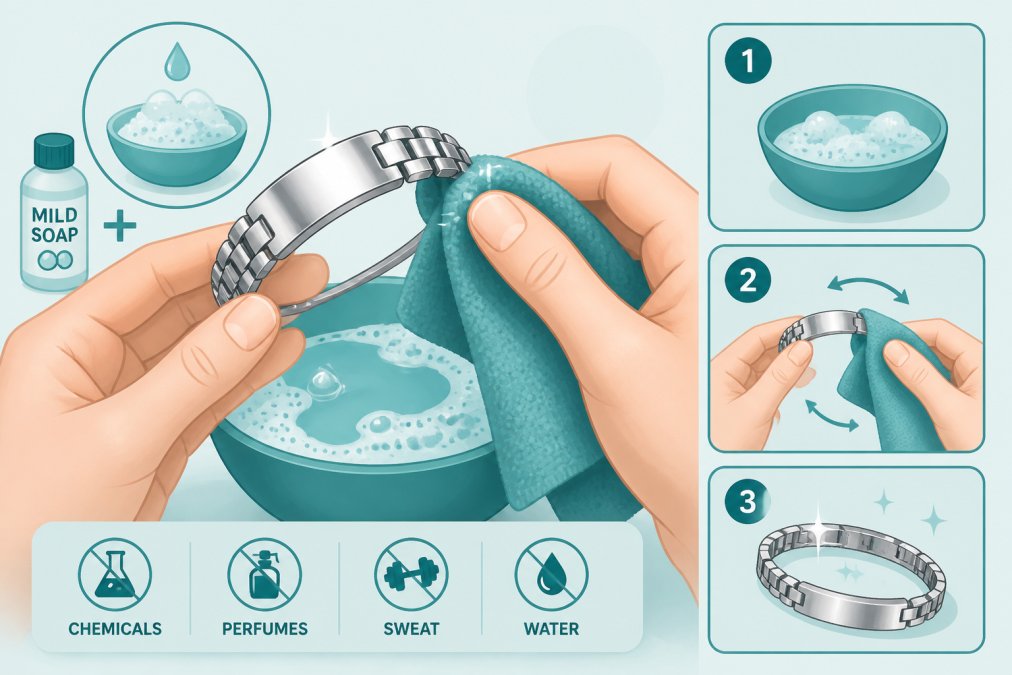
Maintaining stainless steel jewelry is straightforward. Rinse the piece under warm running water, apply mild dish soap, and gently wipe with a soft microfiber cloth. Rinse thoroughly and dry immediately with a lint-free cloth.
For stubborn buildup, create a gentle cleaning paste by mixing baking soda with a small amount of water. Apply with a soft cloth using gentle circular motions, then rinse and dry. Avoid abrasive materials, steel wool, harsh scrubbing pads, and aggressive chemicals, as these can damage the protective chromium oxide layer. Never use bleach or chlorine-based cleaners.
For personalized pieces with engravings, use a soft brush to gently clean inside the engraved areas, then dry thoroughly. Keep stainless steel jewelry in a dry environment, preferably in a soft cloth pouch. Remove jewelry before applying lotions, perfumes, or cosmetics, then rinse afterward to restore shine.
Is Stainless Steel Hypoallergenic and Safe for Sensitive Skin?
Stainless steel jewelry is considered hypoallergenic, meaning it's unlikely to trigger allergic reactions in most people. The primary concern with metal jewelry is nickel sensitivity. Stainless steel contains nickel as part of its alloy composition, but the amount is typically minimal and bound within the metal matrix rather than leaching freely.
316L stainless steel minimizes nickel leaching through its composition and protective oxide layer. The chromium oxide barrier prevents nickel from migrating to the skin surface. For individuals with mild nickel sensitivity, 316L stainless steel jewelry often remains comfortable for daily wear. However, people with severe nickel allergies should consider titanium or niobium alternatives.
The hypoallergenic nature of stainless steel makes it an excellent choice for personalized gifts intended for children, teenagers, or anyone with a history of skin sensitivity. Moisture and sweat don't compromise stainless steel's hypoallergenic properties. Unlike some metals that react with perspiration to create skin irritation, stainless steel maintains its protective oxide layer even during physical activity.
Pros, Cons, and Real-World Considerations
Stainless steel jewelry offers compelling advantages for meaningful gifts, but understanding its limitations is important.
Pros of stainless steel jewelry:
Durability is the standout benefit. Stainless steel resists tarnishing, corrosion, and scratching far better than sterling silver or gold plating. Low maintenance is the second major advantage, unlike sterling silver, which requires regular polishing, stainless steel needs only occasional rinsing and drying. Affordability without compromise allows you to invest in higher-quality personalization and craftsmanship. Hypoallergenic properties make stainless steel suitable for sensitive skin, particularly in 316L grade. Water resistance means stainless steel jewelry can handle moisture, sweat, and brief submersion without damage.
Cons of stainless steel jewelry:
Aesthetic limitations exist for those seeking precious metal appearance. Stainless steel has a distinct industrial look that some find less elegant than the warmth of gold or the brilliance of silver. Repairability and resizing present challenges, stainless steel is harder to work with than precious metals, meaning jewelers often cannot resize rings or repair broken pieces. Nickel content, while generally safe, can be problematic for people with severe nickel allergies.
Real-world considerations:
The choice between stainless steel and precious metals depends on your priorities. If you're celebrating a graduation or anniversary with a gift meant to be worn daily for years, stainless steel delivers exceptional value and durability. If you're seeking an heirloom piece that will be resized or extensively repaired over generations, precious metals offer more flexibility. Consider the recipient's lifestyle, someone who exercises regularly, works in demanding environments, or spends time in water will benefit enormously from stainless steel's resilience. At Flogaze, we've found that stainless steel jewelry resonates strongly with families celebrating significant milestones because it combines durability, affordability, and low maintenance.
Stainless steel jewelry represents a practical, lasting way to celebrate life's meaningful moments. Its resistance to tarnishing, corrosion, and daily wear makes it an ideal material for personalized gifts that will be cherished for years. Whether you're marking a graduation, anniversary, or special family milestone, choosing durable stainless steel ensures your gift remains a beautiful keepsake that requires minimal maintenance and maximum sentiment. Explore Flogaze's curated collection of personalized stainless steel jewelry and watches to find the perfect piece that captures your occasion and stands the test of time.
| Feature | Stainless Steel | Sterling Silver | Titanium |
|---|---|---|---|
| Tarnish Resistance | Excellent | Poor | Excellent |
| Scratch Resistance | High | Low | Very High |
| Maintenance | Minimal | Frequent | Minimal |
| Hypoallergenic | Yes (316L) | Yes | Yes |
| Cost | Low | High | Medium |
| Repairability | Difficult | Easy | Difficult |
| Water Resistance | Excellent | Good | Excellent |
| Daily Wear Suitability | Excellent | Fair | Excellent |
Frequently Asked Questions
Is stainless steel jewelry actually durable for everyday wear?
Yes. Stainless steel jewelry is designed for daily wear because of its high tensile strength and corrosion resistance. Unlike softer metals, it resists scratches and maintains its lustre even with constant moisture exposure. The 316L grade, the standard used in quality jewelry, offers superior durability compared to lower grades, making it ideal for pieces you wear every day without worry.
What makes 316L stainless steel jewelry benefits so significant?
316L stainless steel contains molybdenum in its alloy composition, which dramatically improves chemical resistance and corrosion resistance compared to 304-grade steel. This means your jewelry resists tarnishing, stays hypoallergenic longer, and handles exposure to sweat, saltwater, and everyday chemicals without degrading. The result is jewelry longevity that justifies the investment in quality pieces.
Does stainless steel jewelry turn your skin green or cause irritation?
Quality stainless steel jewelry, especially 316L grade, is hypoallergenic and nickel-free when manufactured properly, so it shouldn't turn your skin green or cause irritation. The nickel content is minimal and locked within the alloy structure. If you have extremely sensitive skin, confirm the piece is labeled nickel-free, and consider pieces with PVD coating for additional protection against any metal oxidation.
How do you clean stainless steel jewelry without damaging it?
Clean stainless steel jewelry with mild soap and warm water, using a soft cloth to dry it completely. For tougher buildup, soak the piece for 15 minutes, then gently scrub with a soft-bristled toothbrush. Avoid ultrasonic cleaners on plated pieces, as they can strip PVD coating. For maintenance-free daily care, simply wipe with a microfiber cloth after wearing. This routine keeps your jewelry's lustre intact for years.
Is stainless steel or sterling silver better for jewelry longevity?
Stainless steel vs sterling silver durability favors stainless steel for daily wear. Stainless steel resists tarnishing, scratches, and corrosion without requiring regular polishing. Sterling silver requires consistent maintenance to prevent tarnish and is softer, making it prone to dents and wear. For pieces meant to last through constant use, like engagement rings or everyday necklaces, stainless steel offers superior durability and lower maintenance.
Can stainless steel jewelry be resized or repaired?
Stainless steel is harder than sterling silver, making resizing more difficult and expensive. Some jewelers can resize simple stainless steel bands, but complex designs may require replacement rather than alteration. Before purchasing, confirm the piece fits properly. For personalized or sentimental items, ask about sizing options before ordering to ensure your piece will be wearable long-term without costly repairs.
What's the environmental impact of stainless steel jewelry?
Stainless steel is highly recyclable and doesn't degrade in landfills like some precious metals. Its durability also means fewer replacements over time, reducing overall consumption. However, mining and refining the alloy components do have environmental costs. Choosing quality, durable pieces you'll wear for years, rather than fast-fashion jewelry replaced frequently, minimizes your environmental footprint and represents affordable luxury with longevity.
Sources referenced:
[EXTERNAL_LINK: FDA guidance on surgical implant materials and biocompatibility standards | fda.gov]
[EXTERNAL_LINK: American Society for Testing and Materials standards for stainless steel specifications | astm.org]
[EXTERNAL_LINK: Jewelry Industry Research on metal durability and hypoallergenic properties | jckonline.com]
This article was written using GrandRanker


