


Table of Contents
- What Makes Custom Jewelry Different from Mass-Produced Pieces
- Breaking Down the True Cost of Custom Jewelry
- Resale Value of Custom Jewelry: What You Should Expect
- Durability and Long-Term Wearability
- How to Find a Reputable Custom Jeweler
- Is Custom Jewelry Worth It for You?
- Conclusion
Last Updated: August 7, 2026
What Makes Custom Jewelry Different from Mass-Produced Pieces
Custom jewelry stands apart from mass-produced pieces in fundamental ways that directly affect both cost and lasting value. When you commission a custom piece, you're collaborating with a jeweler to create something unique, not selecting from existing inventory.
Craftsmanship and Design Labor
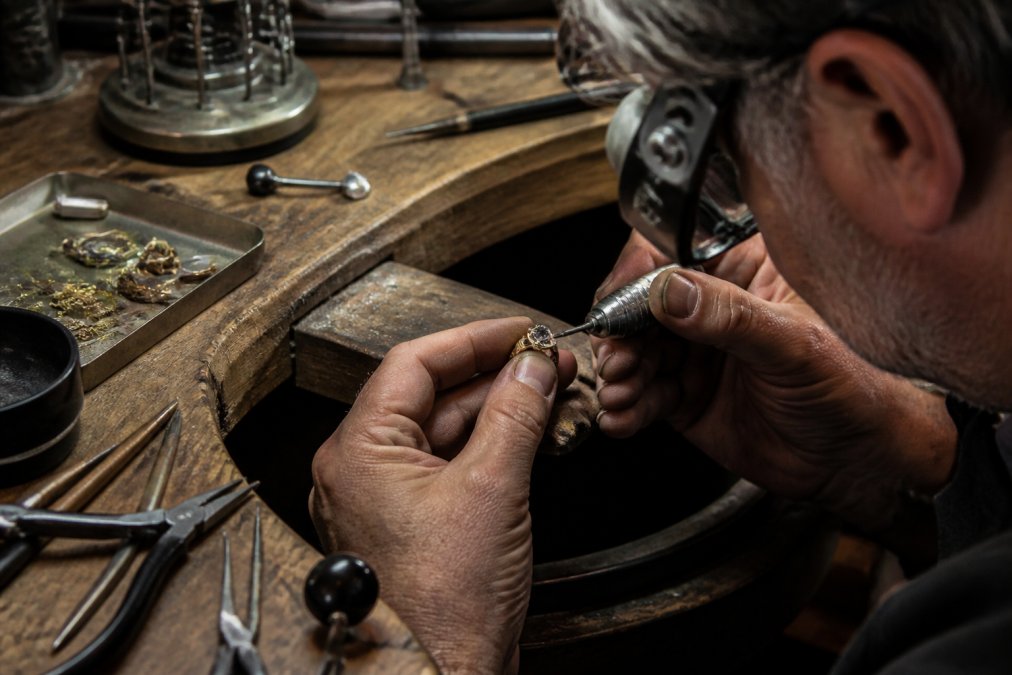
A mass-produced ring moves through assembly lines where each worker performs one repetitive task. A custom piece requires a jeweler to spend hours, sometimes days, translating your vision into reality through consultations, sketches, revisions, and meticulous handiwork.
At Flogaze, we understand that personalized jewelry represents a significant investment. Design labor also includes revisions, adjustments to band thickness, stone size, or settings, adding hours that mass-produced pieces never encounter.
Material Quality and Precious Metals
Custom jewelry typically uses higher-quality precious metals than mass-produced alternatives. A mass-produced ring might use gold-plated brass or low-karat gold; custom pieces usually start with solid precious metals: 14K or 18K gold, platinum, or sterling silver.
An 18K gold ring contains 75% pure gold, while a mass-produced piece might be 10K gold (42% pure) or just gold plating over base metal. Plated pieces wear through; solid gold endures. Custom jewelers also source higher-quality gemstones, allowing you to specify clarity, origin, or lab-grown alternatives. This transparency and choice command a premium but give you control over what you're purchasing.
Breaking Down the True Cost of Custom Jewelry
Understanding custom jewelry pricing requires looking beyond the quoted price to several hidden costs that emerge during and after creation.
Design Consultation and Revision Costs
Most custom jewelers charge for design consultation, typically ranging based on complexity and experience level. This fee may be credited toward your final purchase or charged separately. Revisions add another layer, some jewelers charge per revision, while others include 2-3 in their base fee. A major redesign can add hundreds of dollars to your total cost.
Hidden Expenses: Appraisals, Insurance, and Maintenance
Once you own custom jewelry, additional costs emerge. A professional appraisal becomes essential for insurance or resale. According to IGI Gem and Jewelry Appraisal Services, professional appraisals are accepted by all major insurance carriers.
Your homeowners or renters insurance typically covers jewelry only up to $1,500 or $2,500. High-value custom pieces require specialized jewelry insurance. According to Jewelers Mutual Insurance Group, specialized jewelry insurance covers mysterious disappearance and loss scenarios that standard policies exclude, with premiums typically running 1-2% of the jewelry's appraised value annually. A $5,000 custom piece might cost $50-100 per year to insure properly.
Maintenance is ongoing. Custom jewelry requires professional cleaning and inspection periodically to examine prongs, check stone settings, and ensure structural soundness. This costs $50-150 per visit. Over a decade, these visits add up.
Resale Value of Custom Jewelry: What You Should Expect
Custom jewelry typically depreciates significantly. A custom engagement ring purchased for $4,000 might resell for $1,500-2,000, if you find a buyer at all.
The resale market for custom jewelry is limited. A custom design appeals to the person who commissioned it; the market for "someone else's custom piece" is small. Precious metals resell at 40-60% of retail price due to refining costs and dealer markups. Gemstones experience even steeper depreciation. A diamond purchased as part of a custom setting resells at a fraction of its original cost.
Unique designs work against resale value. A highly personalized piece, engraved with names or featuring unconventional stone combinations, appeals to almost no one but the original owner. A classic solitaire resells more easily than a bespoke design.
This depreciation doesn't mean custom jewelry isn't worth the price. You're not buying an investment that appreciates; you're buying an experience, a keepsake, and emotional significance. If you can accept this reality, custom jewelry becomes worth considering.
Durability and Long-Term Wearability
Custom jewelry's advantage becomes apparent over years of wear. A well-crafted custom piece made with solid precious metals and quality stones can last a lifetime or several lifetimes if passed down.
Solid precious metals withstand daily wear far better than plated alternatives. An 18K gold ring maintains its appearance and structural integrity after decades of constant wear. A mass-produced plated ring shows wear within months as plating flakes and base metal tarnishes.
Stone setting quality affects long-term wearability significantly. A custom jeweler typically uses more secure setting methods than mass production allows. Prongs are carefully shaped to hold stones securely; bezels are properly sized; metalwork is solid, not thin and prone to flexing.
This durability matters most for pieces worn constantly, engagement rings, daily-wear pendants, or watches. A piece worn occasionally doesn't demand the same durability investment. Maintenance costs become reasonable insurance for a piece you'll wear for 20 years compared to replacing mass-produced jewelry every few years.
How to Find a Reputable Custom Jeweler
Finding the right jeweler determines whether your custom jewelry investment proves worthwhile. A skilled, trustworthy jeweler creates something beautiful that lasts.
Checking Credentials and Hallmarks
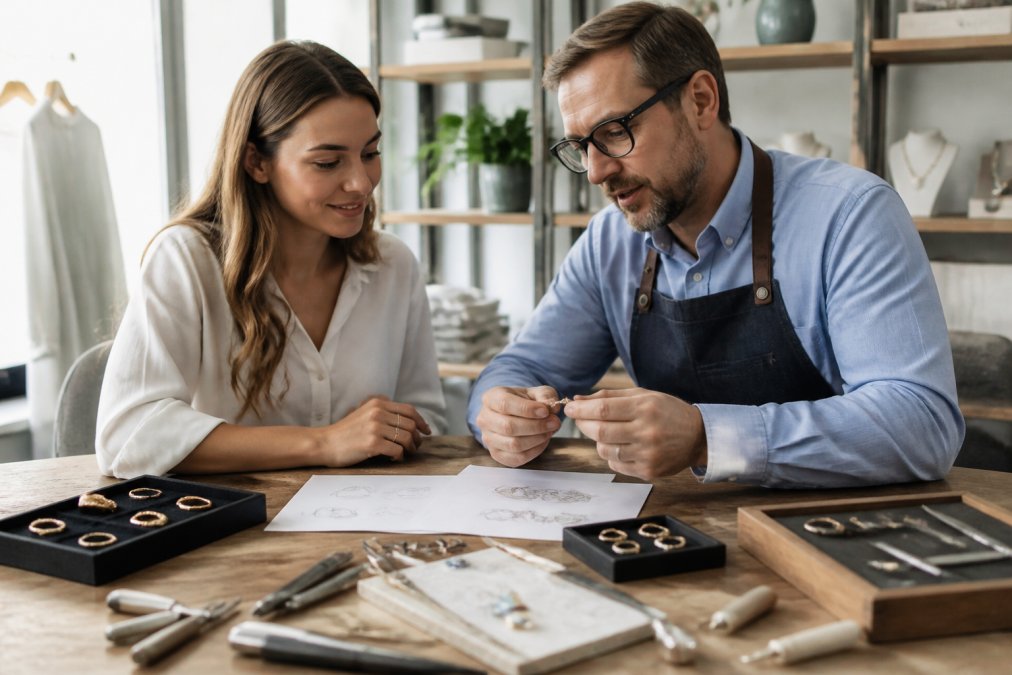
Look for jewelers who belong to professional organizations like the American Society of Appraisers (ASA) or the Jewelers of America. These memberships indicate the jeweler has met industry standards and committed to ethical practices.
Every piece of precious metal jewelry should carry a hallmark indicating metal type and purity. An 18K gold piece should be marked "18K" or "750"; platinum should be marked "Pt" or "Plat"; sterling silver should be marked "925" or "Sterling." If a jeweler can't explain these markings or refuses to use them, walk away.
Request written documentation of materials: metal type and weight, gemstone specifications (including certifications for diamonds), and final price. This protects you if disputes arise later.
Evaluating Portfolio and Customer Reviews
Portfolio examination reveals a jeweler's actual capabilities. Ask to see pieces created for other clients and look for consistency in quality and attention to detail. Read reviews on Google, Yelp, and industry platforms, looking for patterns about quality, communication, and pricing.
Ask for references directly. Speaking with someone who's commissioned from a jeweler answers questions reviews can't: Was the jeweler responsive? Did the final piece match expectations? Did they handle problems professionally?
Discuss timelines upfront. Quality custom work takes 4-8 weeks depending on complexity. A jeweler promising quick turnaround is either cutting corners or lacks capacity.
Is Custom Jewelry Worth It for You?
Whether custom jewelry is worth the price depends entirely on your priorities and use case.
Custom jewelry is worth the price when you want a piece you'll wear constantly for decades. An engagement ring, daily-wear pendant, or watch benefits from custom craftsmanship and quality materials. You're not buying to resell; you're buying to wear and potentially pass down.
Custom jewelry is worth the price when emotional significance matters more than financial return. A piece commemorating a specific moment, graduation, anniversary, or milestone carries value beyond its material worth. Flogaze specializes in exactly this kind of meaningful personalization, creating keepsakes designed to commemorate life's most important moments.
Custom jewelry is worth the price when you have specific requirements mass-produced jewelry doesn't meet: a particular stone combination, unique design, or materials reflecting your values like ethically sourced gemstones or lab-grown diamonds.
Custom jewelry is probably not worth the price when you're budget-conscious and need to minimize spending. Mass-produced jewelry serves your needs adequately at lower cost.
Custom jewelry is not worth the price if you're hoping to recoup your investment. Resale value rarely justifies initial cost. If viewing jewelry as a financial investment, custom pieces are poor choices.
Custom jewelry is not worth the price if you're indecisive about what you want. Revision costs add complexity. Clarify preferences first, then consider custom.
| Situation | Custom Jewelry Worth It? | Why or Why Not |
|---|---|---|
| Daily-wear engagement ring or pendant | Yes | Durability and personal significance justify premium cost |
| Commemorative piece for milestone event | Yes | Emotional value exceeds financial depreciation |
| Specific design not available mass-produced | Yes | Custom creation is the only option to meet requirements |
| Budget-conscious purchase | No | Mass-produced alternatives cost significantly less |
| Investment/resale focus | No | Depreciation is steep; poor financial investment |
| Indecisive about design preferences | No | Revisions add cost; better to clarify preferences first |
| Occasional-wear special occasion piece | Maybe | Depends on how much you value the personal design |
Conclusion
Is custom jewelry worth the price? The answer depends on what you value. If you're seeking a piece designed specifically for you that reflects your taste, celebrates a meaningful moment, and will endure decades of wear, custom jewelry delivers value that mass-produced alternatives can't match. The craftsmanship, material quality, and personalization justify the premium cost.
If you're hoping to recoup your investment, custom jewelry disappoints. Resale value is poor, and the emotional significance that makes custom pieces meaningful to their owners makes them less desirable to strangers.
At Flogaze, we've built our entire collection around the belief that personalized jewelry creates lasting keepsakes for life's most important moments. Our pieces combine high-quality stainless steel construction with water-resistant and scratch-proof designs, ensuring they withstand constant wear while remaining beautiful for years. Each piece arrives ready to gift, with thoughtful packaging that honors the significance of the occasion.
Shop Now at Flogaze and discover how custom personalization transforms jewelry from an accessory into a meaningful keepsake.
Frequently Asked Questions
Is it cheaper to have jewelry custom made or buy retail?
Custom jewelry typically costs more upfront due to design labor, consultation time, and personalized craftsmanship. However, you're paying for a unique piece tailored to your specifications rather than a mass-produced design. Retail jewelry often carries significant retail markup, while custom pieces reflect actual material and labor costs. The true value depends on whether you prioritize uniqueness and sentimental significance over initial price.
What are the hidden costs of designing custom jewelry?
Beyond the base price, expect costs for professional appraisals (required for insurance), specialized jewelry insurance (typically 1-2% of value annually), and ongoing maintenance such as cleaning and polishing. Design revisions may incur additional fees. For high-value pieces, you'll also need proper storage and possibly security measures. Factor these ongoing expenses into your total investment before committing to a custom piece.
Does custom jewelry hold its resale value better than mass-produced pieces?
Custom jewelry generally depreciates similarly to mass-produced fine jewelry, typically 20-40% of the original purchase price at resale. However, unique, well-crafted pieces with strong craftsmanship may retain value better if the design remains timeless. The resale market for custom jewelry is smaller and more niche, which can limit buyer interest. If investment potential is your priority, focus on pieces with intrinsic material value rather than design uniqueness.
How do you determine if a custom jeweler is reputable?
Look for jewelers with credentials from the American Society of Appraisers (ASA) or similar professional organizations. Request to see their portfolio and ask for references from past clients. Verify that they use hallmarked precious metals and can provide documentation of material purity. Check online reviews across multiple platforms and ask about their design process, revision policies, and warranty. A reputable jeweler should be transparent about costs and timelines upfront.
This article was written using GrandRanker


