


Table of Contents
- What Makes Tarnish-Free Jewelry the Right Gift Choice
- Materials That Guarantee Tarnish-Free Performance
- How to Tell If Jewelry Is Tarnish-Free
- Waterproof Gold Jewelry for Everyday Gifting
- Jewelry Care Tips for Longevity and Shine
- Why Tarnish-Free Jewelry Makes Meaningful Gifts
- Conclusion
Last Updated: August 8, 2026
What Makes Tarnish-Free Jewelry the Right Gift Choice
Tarnish-free jewelry represents a fundamental shift in how we think about meaningful gifts. Unlike traditional pieces that require constant maintenance and eventually lose their luster, tarnish-free jewelry maintains its brilliance through years of everyday wear. This matters because the best gifts don't demand apologies or excuses, they just work.
When you give someone tarnish-free jewelry, you're not just offering an accessory. You're giving them something that stays beautiful without fuss, that can be worn to the shower, to the gym, to the beach, and still look pristine. For life's significant moments, graduations, anniversaries, promotions, or simply saying "I love you", this durability transforms a piece from a fragile luxury into a genuine keepsake.
At Flogaze, we understand that the most meaningful gifts are those that endure. Our personalized jewelry collection is crafted with materials specifically chosen to resist tarnish, corrosion, and the daily wear that would compromise ordinary pieces. A necklace engraved with a graduation date, a bracelet marking an anniversary, a watch commemorating a milestone, these pieces deserve to remain as vibrant as the moment they were given.
The science behind tarnish-free performance matters less than the practical result: you can give a piece of jewelry and never worry that it will disappoint the recipient. No need to include care instructions that sound like warnings. No anxiety about whether it will hold up. That peace of mind is what makes tarnish-free jewelry the smarter choice for gifts.
Materials That Guarantee Tarnish-Free Performance
The material you choose determines everything about how a piece of jewelry will age. Three categories dominate the tarnish-free market, and each offers a different balance of durability, appearance, and longevity.
Stainless Steel: The Durable Foundation
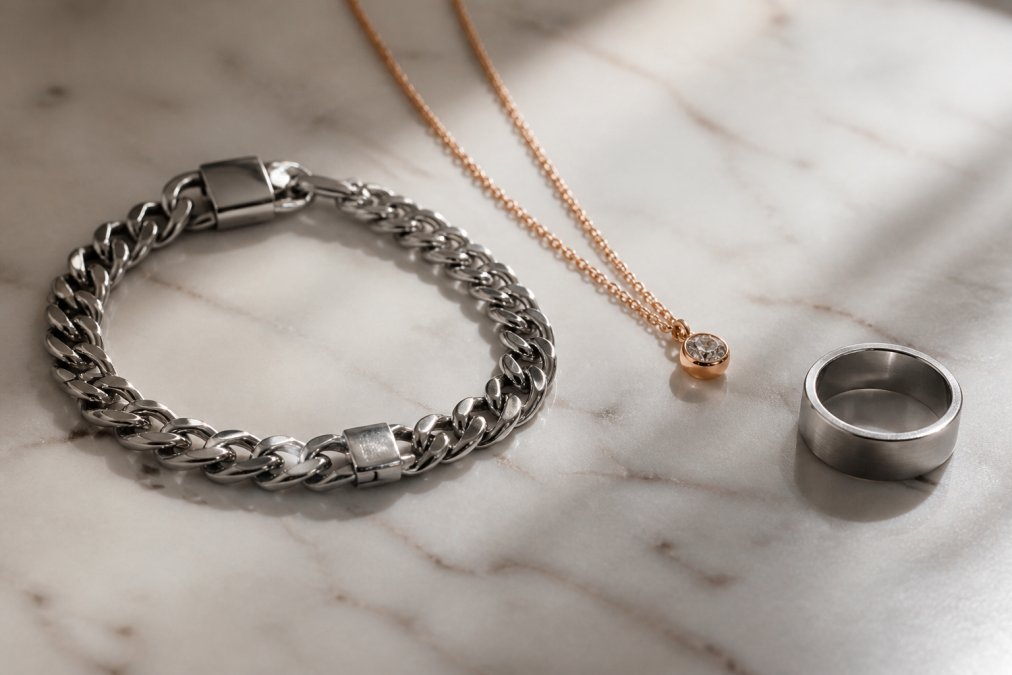
Stainless steel has become the foundation of everyday jewelry for a reason: it simply doesn't tarnish. The material resists oxidation through a passive chromium oxide layer that forms on its surface, protecting the underlying metal from air and moisture. This isn't theoretical, stainless steel pieces can spend years in saltwater environments and still maintain their finish.
For gifting purposes, stainless steel offers genuine advantages. It's hypoallergenic, making it safe for people with nickel sensitivities or metal allergies. It's scratch-resistant compared to softer metals like gold or silver. And it's affordable enough that you can invest in quality without the price tag that comes with precious metals.
The one limitation: stainless steel won't develop the warm patina that some people associate with fine jewelry. It stays bright and modern indefinitely. For minimalist aesthetics or contemporary designs, this is perfect. For vintage-inspired or traditional looks, you might consider alternatives.
PVD Coating: Science-Backed Protection
PVD (Physical Vapor Deposition) coating represents a more sophisticated approach to tarnish prevention. The process deposits a thin, durable layer of metal or ceramic onto a base material, creating a barrier that prevents oxidation while maintaining the appearance of precious metals.
What makes PVD different from simple gold plating is thickness and durability. A quality PVD coating can be 2-5 microns thick, thin enough to feel natural, thick enough to resist wear from daily use. Unlike electroplating, which can wear through in months, PVD coatings maintain their integrity through years of contact with water, sweat, and friction.
For someone who wants the aesthetic of gold, rose gold, or other precious metals without the maintenance, PVD-coated pieces deliver. They look indistinguishable from solid gold to the naked eye but cost a fraction of the price. More importantly, they won't tarnish, fade, or require the polishing that real gold-plated jewelry demands.
The technical reality: PVD coating creates a corrosion-resistant, wear-resistant surface that modern jewelry science has perfected. If you're buying personalized pieces, where the engraving adds sentimental value that deserves protection, PVD coating ensures that value remains visible and readable for decades.
Gold Vermeil vs. Plated Alternatives
Understanding the difference between gold vermeil and standard gold plating matters when you're evaluating tarnish-free claims. Gold vermeil is a specific standard: sterling silver base with at least 2.5 microns of gold plating. This thickness provides real durability, though it will eventually wear with heavy use.
Standard gold plating, by contrast, often uses much thinner layers, sometimes under 1 micron. This is where the "tarnish" problem emerges. As the plating wears away, the base metal oxidizes, and the piece loses its luster. Within months or a couple of years, depending on wear patterns, you're looking at a piece that needs replating.
Gold vermeil sits in the middle ground. It's more durable than cheap plating but less permanent than solid gold or PVD coatings. For gifts where the appearance matters but the budget is constrained, vermeil offers a reasonable compromise. For truly tarnish-free performance, PVD or stainless steel are the stronger choices.
How to Tell If Jewelry Is Tarnish-Free
The claim "tarnish-free" appears on countless product listings, but not all claims are equal. Here's how to evaluate whether a piece will actually stay beautiful.
Check the material documentation first. Legitimate tarnish-free jewelry comes with clear labeling: "Stainless Steel 316L," "PVD Coated," or "Gold Vermeil" with thickness specifications. If the listing is vague, "premium metal," "high-quality coating," "durable finish", that's a red flag. Sellers of genuine tarnish-free pieces are specific because the material is the selling point.
Look for third-party verification or certifications. Reputable manufacturers test their coatings and provide documentation. Sellers of genuine tarnish-free pieces often provide information about material composition and durability standards, so you know exactly what you're getting.
Water resistance is a practical test. Truly tarnish-free jewelry can handle water exposure without degradation. If a seller warns you to keep a piece dry, it's not genuinely tarnish-free, it's plated, and the plating will fail. Real tarnish-free materials (stainless steel, quality PVD, gold vermeil) are shower-safe and sweat-proof.
Price context matters too. Genuine tarnish-free jewelry costs more than fashion jewelry precisely because the materials are better. If a piece is significantly cheaper than comparable options from reputable sellers, the material claims deserve skepticism.
Waterproof Gold Jewelry for Everyday Gifting
The term "waterproof gold jewelry" requires careful parsing. Gold itself doesn't corrode in water, but the way it's treated and what it's mixed with determines whether a piece can truly handle constant water exposure.
Solid gold (14k, 18k) is naturally waterproof and corrosion-resistant. It can be worn in the shower, at the beach, or in the pool indefinitely without damage. The alloy metals mixed with gold (copper, zinc, silver) might tarnish slightly over decades, but the piece itself won't degrade.
The problem emerges with gold-plated or gold-vermeil pieces. Water doesn't damage the gold layer directly, but repeated exposure accelerates wear. Moisture seeps into microscopic gaps, the base metal oxidizes, and the plating eventually flakes away. A piece that's "waterproof" in the sense that water won't immediately destroy it might still tarnish within a year or two of regular water exposure.
For gifts meant to be worn every day, including during showers, workouts, and beach trips, PVD-coated stainless steel or solid gold are the honest choices. They'll maintain their appearance through genuine daily abuse. If you're recommending gold-plated jewelry as "waterproof," you're setting the recipient up for disappointment.
Flogaze's water-resistant watch designs, for example, use stainless steel construction with PVD coating options, specifically engineered for people who refuse to remove their jewelry. That's the standard tarnish-free jewelry should meet.
Jewelry Care Tips for Longevity and Shine
Even tarnish-free jewelry benefits from basic care. The goal isn't to prevent tarnish, the material does that, but to maintain shine and prevent damage from impact or harsh chemicals.
Store pieces in a dry place, ideally in the gift box they came in or a soft pouch. This protects against dust and accidental scratching. Avoid storing tarnish-free jewelry in damp environments like bathrooms, where humidity can eventually affect even corrosion-resistant materials.
Clean regularly with a soft, lint-free cloth. For most tarnish-free pieces, this is all you need. Gently wipe the surface after wearing to remove oils and sweat that can dull the finish. Once a month, use a slightly damp cloth with mild soap if needed, then dry immediately.
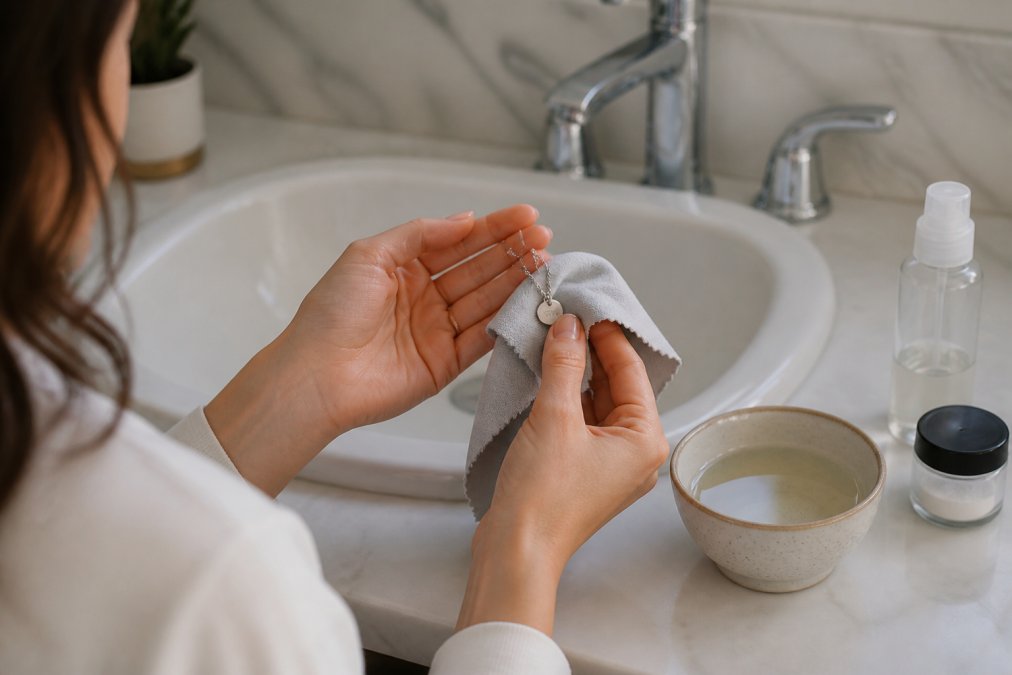
Avoid harsh chemicals. Chlorine, bleach, and strong cleaning agents can damage even tarnish-free coatings over time. Remove jewelry before swimming in chlorinated pools or using harsh household cleaners. This isn't because the piece will tarnish, it won't, but because these chemicals can degrade the surface finish.
For PVD-coated pieces specifically, avoid abrasive polishing cloths or cleaners. The coating is durable but not infinitely thick. Gentle care with soft materials preserves it indefinitely.
Inspect periodically for loose stones or clasps. Tarnish-free materials won't degrade, but mechanical components can wear. A quick annual check ensures the piece stays functional and beautiful.
Why Tarnish-Free Jewelry Makes Meaningful Gifts
The emotional weight of a gift often depends on whether it holds up to real life. A beautiful necklace that requires special storage and careful handling becomes a source of anxiety, not joy. Tarnish-free jewelry removes that burden entirely.
When you give someone a piece they can actually wear, to work, to the gym, in the shower, during a vacation, you're saying something important. You're saying this gift is for living in, not for preserving in a box. You're trusting them with something that won't disappoint through neglect or bad timing.
For milestone gifts especially, this matters. A graduation necklace should mark the beginning of a new chapter, not become a fragile object that requires apologies when it tarnishes. An anniversary bracelet should be something worn every day as a reminder, not something reserved for special occasions because of maintenance demands.
The durability of tarnish-free materials also reflects the permanence of the occasion. A piece that lasts decades, that maintains its beauty without effort, mirrors the lasting nature of the relationship or milestone it commemorates. There's a quiet confidence in giving something you know will hold up.
Flogaze's approach to personalized jewelry recognizes this. Each piece is designed to withstand constant use while remaining a cherished keepsake. The engraving stays readable, the finish stays bright, and the gift stays meaningful through years of daily wear.
Conclusion
Choosing tarnish-free jewelry for gifts means choosing pieces that work in the real world. Whether you select stainless steel for its durability, PVD coating for its aesthetic flexibility, or gold vermeil for its balance of luxury and practicality, the core benefit remains the same: a gift that stays beautiful without fuss.
Flogaze's personalized jewelry collection is crafted specifically for this purpose. Each piece combines high-quality stainless steel construction with water-resistant and scratch-proof designs, ensuring your gift remains a vibrant keepsake for years to come. The gift box included with every purchase makes presentation seamless, so your thoughtfulness arrives ready to present.
Get started with Flogaze and choose a piece that celebrates the moment while lasting through all the moments that follow.
Frequently Asked Questions
What is the best material for tarnish-free jewelry?
Stainless steel and PVD-coated metals are the best choices for tarnish-free jewelry. Stainless steel resists corrosion and oxidation naturally, while PVD (Physical Vapor Deposition) coating creates a protective barrier that prevents tarnishing. For gold options, 18k gold-plated or gold vermeil over stainless steel offers durability without the high cost of solid gold, making it ideal for meaningful gifts that last.
How can I tell if jewelry is actually tarnish-free before purchasing?
Check product descriptions for material specifications: look for stainless steel (at least 316L grade), PVD coating mentions, or gold vermeil certifications. Reputable sellers like Flogaze disclose material composition and plating thickness. Ask about hypoallergenic properties and nickel-free guarantees. Request photos or videos showing the piece's finish, and verify warranty or durability guarantees that back tarnish-resistance claims.
Is stainless steel jewelry actually tarnish-free?
Yes, high-quality stainless steel (particularly 316L grade) is naturally tarnish-free and corrosion-resistant due to its chromium content, which creates a protective oxide layer. This makes it ideal for everyday wear and waterproof applications. However, lower-grade stainless steel may show discoloration over time. Flogaze uses premium stainless steel construction specifically chosen for durability and long-lasting shine, ensuring your gift remains beautiful for years.
Can you wear tarnish-free jewelry in the shower or while swimming?
Tarnish-free jewelry made from stainless steel or PVD-coated metals can safely handle shower exposure and brief freshwater contact. However, chlorine in pools and salt in ocean water can damage plating over time. Remove jewelry before swimming or prolonged water exposure. Stainless steel watches with water-resistant ratings are designed for shower use, but always check the specific rating on your piece. Rinse with fresh water afterward to prevent mineral buildup.
What are the best jewelry care tips for maintaining tarnish-free pieces long-term?
Store tarnish-free jewelry in a dry place away from humidity and direct sunlight to prevent oxidation and fading. Clean gently with a soft, lint-free cloth after wearing to remove sweat and oils. Avoid harsh chemicals, perfumes, and lotions that can damage plating. For stainless steel, occasional warm water and mild soap work well. For plated pieces, skip abrasive cleaners. Regular maintenance preserves the long-lasting shine and keeps your keepsake looking as beautiful as the day you gave it.
This article was written using GrandRanker


