


Table of Contents
- Stainless Steel vs Sterling Silver Jewelry: Key Differences at a Glance
- Understanding 925 Sterling Silver Meaning and Quality
- Hypoallergenic Jewelry Metals: Skin Sensitivity and Safety
- Jewelry Care Tips for Both Metals
- Precious Metals for Jewelry: Investment and Resale Value
- Environmental Impact and Sustainability Considerations
- Stainless Steel vs Sterling Silver: Which Is Better for Your Lifestyle?
- Resizing and Repairability: Long-Term Maintenance Needs
Last Updated: July 21, 2026
Stainless Steel vs Sterling Silver Jewelry: Key Differences at a Glance
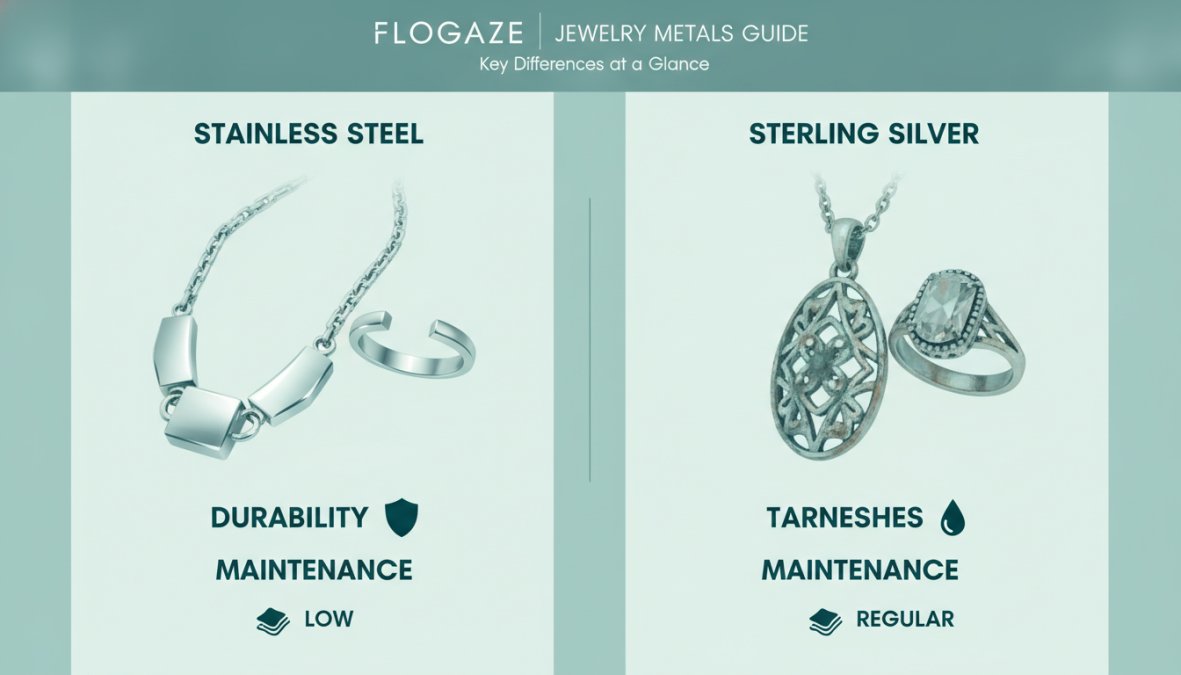
Sterling silver is 92.5% pure silver mixed with other metals for durability. Stainless steel, particularly 316L grade, is a base metal alloy engineered for strength and corrosion resistance. Stainless steel won't tarnish or require polishing and costs less upfront. Sterling silver develops patina over time, needs occasional cleaning, but holds intrinsic precious metal value. Neither is objectively superior; it depends on your lifestyle and priorities.
Material Composition and .925 Stamp Explained
Stainless steel jewelry is made from iron-based alloy, typically 316L stainless steel, which contains chromium and nickel for corrosion resistance. Sterling silver, marked with the .925 stamp, contains exactly 92.5% pure silver and 7.5% other metals, usually copper. That copper makes sterling silver workable for jewelry; pure silver is too soft.
The practical difference emerges in durability. Stainless steel's iron base makes it harder and more resistant to dents and dings. Sterling silver scratches more easily but those scratches can often be polished out without permanent damage. For jewelry that takes real abuse, stainless steel performs better. For pieces you want to look pristine and refined, sterling silver's luster is difficult to match, though it requires more care.
Durability and Scratch Resistance Comparison
Stainless steel dominates when durability is the priority. The 316L grade resists corrosion, oxidation, and scratching far better than sterling silver, which is why sports watches and everyday-wear jewelry often use stainless steel.
Sterling silver is softer and more prone to visible scratching. A piece worn daily will show wear within months. However, many find this patina appealing, it develops character over time. A professional jeweler can polish out scratches and restore sterling silver to like-new condition, something impossible with stainless steel.
Understanding 925 Sterling Silver Meaning and Quality
The .925 stamp is an official guarantee of precious metal content, 925 parts pure silver per 1,000 total. This standardization exists across all reputable jewelers worldwide. The .925 standard became the global baseline because it represents the sweet spot between workability and purity.
The .925 stamp also protects you as a buyer. It's a legal hallmark in most countries, meaning if a piece is marked .925 and doesn't contain that amount of silver, the seller is committing fraud. Stainless steel has no equivalent hallmark system because it's not a precious metal. What matters instead is the grade, 316L is the best grade for jewelry.
Why .925 Matters for Precious Metal Value
Sterling silver has intrinsic value. That .925 stamp means your piece contains actual silver that has a market price. Your ring or necklace isn't just jewelry; it's a small quantity of a precious metal you could theoretically sell by weight.
Stainless steel has no intrinsic value. You can't sell it to a precious metals dealer. Its value is purely aesthetic and functional. After 10 years, your sterling silver ring can be melted down and sold for scrap value at minimum. Your stainless steel ring has no fallback value if the design goes out of style.
Tarnish, Oxidation, and Long-Term Appearance
Sterling silver tarnishes because the copper in the alloy reacts with sulfur in the air and moisture, creating a dark layer on the surface. But tarnish is surface-level and completely reversible with proper cleaning. It doesn't damage the underlying silver.
Stainless steel doesn't tarnish because the chromium creates a protective oxide layer that prevents further oxidation. You could leave a stainless steel ring in a humid bathroom for years and it would look essentially unchanged.
Sterling silver requires active maintenance, polishing periodically, anywhere from monthly to quarterly depending on wear and environment. Stainless steel eliminates this maintenance entirely. You can shower in it, swim in it, wear it 24/7 without worrying about tarnish.
Hypoallergenic Jewelry Metals: Skin Sensitivity and Safety
Sterling silver, being 92.5% pure silver with copper alloy, is generally hypoallergenic for most people. If you have a nickel allergy, sterling silver is usually safe.
Stainless steel is trickier. While 316L stainless steel is considered hypoallergenic by most standards, it does contain nickel, typically 8-12% by weight. For people with severe nickel allergies, this can be problematic. However, the nickel in stainless steel is bound within the alloy structure and doesn't leach out the way it does in lower-quality metals. Quality 316L stainless steel from reputable brands is significantly safer than bargain alternatives.
If you have known nickel sensitivity, sterling silver is the safer choice. If you have mild sensitivity or no known allergies, quality stainless steel is fine.
Nickel Content and Skin Discoloration Risk
Nickel causes contact dermatitis (itching, redness, rash) and nickel-related discoloration (dark marks on skin where jewelry touches). Sterling silver doesn't cause this because it contains no nickel. Stainless steel causes it in sensitive individuals because of its nickel content.
One way to reduce risk with stainless steel is to apply a barrier, some people coat the underside of stainless steel rings with clear nail polish to prevent direct skin contact. For daily-wear pieces where skin contact is constant, if you have any nickel sensitivity history, sterling silver is the smarter choice.
Jewelry Care Tips for Both Metals
Sterling silver requires active care: store it in an airtight container to minimize air exposure, polish it monthly with a soft cloth or specialized silver cleaner, and avoid harsh chemicals like chlorine. Professional cleaning at a jeweler once or twice a year keeps it looking pristine.
Stainless steel requires almost no care. Rinse it under warm water with mild soap, dry it with a soft cloth, and you're done. You can wear it in the shower, pool, gym, or ocean.
| Metal | Cleaning Frequency | Storage | Maintenance Effort |
|---|---|---|---|
| Sterling Silver | Monthly or quarterly | Airtight container | 2-3 hours/year |
| Stainless Steel | As needed (optional) | Any | Minimal |
Water Resistance and Daily Wear Protection
Stainless steel is water-resistant and can handle saltwater, chlorine, and constant moisture without degrading. This is why stainless steel watches are designed to be worn 24/7.
Sterling silver isn't waterproof. Water accelerates tarnishing by increasing moisture exposure. Regular submersion in chlorinated pools or saltwater will tarnish sterling silver faster. For gym-goers, swimmers, or anyone with an active lifestyle, stainless steel is the practical choice.
Precious Metals for Jewelry: Investment and Resale Value
Sterling silver holds value because it's a precious metal. You can sell it as a finished piece, as vintage or antique silver, or melted down for scrap silver at minimum weight times current market price.
Stainless steel has no scrap value. You can only sell it as a finished piece, meaning its value depends entirely on whether someone wants that specific design. If you're buying a $500 sterling silver bracelet, you have a safety net: even if you hate it in five years, you can sell the silver for at least a portion of what you paid. A $500 stainless steel bracelet, if the design falls out of favor, might be worth $50 as a used piece.
Environmental Impact and Sustainability Considerations
Mining for silver has environmental costs, but silver mining is relatively small-scale compared to other metals, and recycled silver is readily available. Many jewelers now use recycled sterling silver, which eliminates mining impact while maintaining the same material properties.
Stainless steel production also has environmental costs, but stainless steel is highly recyclable. Recycled stainless steel is common in jewelry manufacturing. The environmental comparison isn't clear-cut. What matters is the specific sourcing practices of the brand you're buying from. Ask the jeweler directly: Is the silver recycled or newly mined? Is the stainless steel recycled?
Mining, Production, and Ethical Sourcing
Silver mining can involve poor labor conditions, water pollution, and habitat destruction if not regulated. Ethical sourcing means the metal was mined under fair labor conditions, with environmental protections, and without funding conflict.
For both metals, recycled material is the most ethical option because it eliminates mining impacts entirely. Recycled silver and recycled stainless steel are chemically identical to newly mined versions, so there's no quality trade-off.
Stainless Steel vs Sterling Silver: Which Is Better for Your Lifestyle?
Choose stainless steel if you wear jewelry constantly, don't want to think about maintenance, work with your hands, exercise regularly, or spend time in humid environments. Choose it if you want a piece that looks the same in five years as it does today.
Choose sterling silver if you're willing to polish regularly, want a precious metal with intrinsic value and resale optionality, prefer the luxurious feel of fine silver, or have nickel sensitivity. Choose it if you're buying an investment piece or something you plan to pass down.
Choose Stainless Steel If...
You have an active lifestyle and don't want jewelry to be another thing you maintain. You work in environments where precious metals might get damaged. You want to wear a piece constantly without removing it for showers, workouts, or swimming. You have nickel sensitivity but want to wear quality jewelry. You're buying a personalized piece meant to be worn daily and you want it to look perfect without effort.
Choose Sterling Silver If...
You want a precious metal with intrinsic value and resale optionality. You're willing to polish regularly and enjoy the ritual of caring for your jewelry. You prefer the warm, luxurious feel of fine silver. You have significant nickel sensitivity. You want the ability to have the piece professionally restored if it gets scratched. You're buying an investment piece or something with long-term sentimental value you plan to pass down.
Styling and Fashion Context for Each Metal
Stainless steel reads as modern and sporty. It pairs well with contemporary fashion, minimalist aesthetics, and active-wear styling. It works equally well with gym clothes or business attire.
Sterling silver reads as more traditional and luxurious. It has a warmth that stainless steel lacks. It pairs well with classic fashion, vintage styling, and dressier occasions. Sterling silver jewelry often feels more "special" than stainless steel.
Resizing and Repairability: Long-Term Maintenance Needs
Sterling silver is remarkably repairable. A jeweler can resize it, repair broken links, remove scratches through polishing, or completely redesign it. If your sterling silver ring gets bent, a jeweler can reshape it.
Stainless steel is much harder to work with. Most jewelers won't resize stainless steel rings because the metal is difficult to cut and reshape without creating weak points. If a stainless steel bracelet link breaks, it often can't be repaired. Scratches can't be removed because polishing doesn't work the way it does on softer metals.
This repairability factor matters if you're buying a piece you plan to keep for decades. A sterling silver ring can be resized as your finger size changes. A stainless steel ring is essentially permanent in its current form.
Choosing between stainless steel vs sterling silver jewelry ultimately comes down to lifestyle and long-term vision. If you want a personalized keepsake that handles daily wear without maintenance, stainless steel delivers durability and lasting beauty. The high-quality 316L construction ensures your engraved bracelet or watch stays sharp and readable for decades, making it the practical choice for gifts meant to be worn constantly.
Frequently Asked Questions
Which is better for sensitive skin: stainless steel or sterling silver jewelry?
Both can be hypoallergenic when made properly. Sterling silver (.925 stamp) is naturally nickel-free if pure, making it excellent for sensitive skin. Stainless steel, particularly 316L stainless steel, is also hypoallergenic and corrosion-resistant. However, some stainless steel alloys may contain trace nickel. If you have severe nickel sensitivity, verify the alloy composition or opt for verified nickel-free stainless steel or solid sterling silver pieces.
What does the .925 stamp mean on sterling silver jewelry?
The .925 stamp indicates that the piece contains 92.5% pure silver and 7.5% other metals (typically copper). This marking certifies the jewelry as genuine sterling silver, a precious metal standard recognized worldwide. The remaining alloy is added for durability and strength, as pure silver alone is too soft for daily wear jewelry. Always look for this stamp when purchasing sterling silver to ensure authenticity and quality.
Does stainless steel jewelry tarnish or require polishing?
Stainless steel is highly resistant to tarnish and oxidation, unlike sterling silver. It maintains its radiant luster with minimal maintenance, typically just occasional rinsing with soap and water. Sterling silver, by contrast, naturally develops patina and tarnish over time due to oxidation and requires regular polishing with specialized jewelry care products to restore its shine. If low maintenance is a priority, stainless steel is the superior choice.
Is sterling silver jewelry more expensive than stainless steel?
Sterling silver typically costs more than stainless steel due to its precious metal content and intrinsic value. Silver prices fluctuate based on market conditions, while stainless steel is an affordable base metal. However, pricing also depends on design, craftsmanship, and brand. Sterling silver pieces may offer better resale value and investment potential, whereas stainless steel jewelry is valued primarily for aesthetics and durability rather than material worth.
Can you wear stainless steel jewelry in the shower or while swimming?
Yes, stainless steel jewelry is highly waterproof and corrosion-resistant, making it safe for showers, swimming, and water sports. Sterling silver, while not inherently damaged by water, can accelerate tarnish formation with prolonged exposure to chlorine, salt water, and moisture. If you lead an active lifestyle or frequently expose jewelry to water, stainless steel is the more practical choice for daily wear without worry about damage or discoloration.
This article was written using GrandRanker


