


Table of Contents
- Why Stainless Steel Jewelry Needs Regular Care
- Materials You'll Need to Clean Stainless Steel Jewelry
- The Best Way to Clean Stainless Steel Jewelry at Home
- Stainless Steel Jewelry Care: Long-Term Maintenance for Plated vs. Solid
- How to Remove Scratches from Stainless Steel Jewelry
- Using an Ultrasonic Cleaner for Stainless Steel Jewelry
- Troubleshooting Specific Stains: Perfume, Lotion, and Sweat
- Common Mistakes When Cleaning Stainless Steel Jewelry
How to Clean Stainless Steel Jewelry: Step-by-Step Guide
Last Updated: July 22, 2026
Learning how to clean stainless steel jewelry properly extends the life of your most treasured pieces and keeps them looking like new. Stainless steel is durable and affordable, but it requires regular maintenance to prevent tarnish, oxidation, and buildup from daily wear. This guide shows you how to clean stainless steel jewelry using simple household items and professional techniques for both solid and plated pieces.
Why Stainless Steel Jewelry Needs Regular Care
Stainless steel resists corrosion better than most metals, but it isn't immune to damage. Daily wear exposes jewelry to sweat, perfume, lotion, and environmental pollutants that gradually accumulate on the surface. These substances can create a chemical reaction leading to oxidation and permanent discoloration if left untouched.
Stainless steel's corrosion resistance comes from a thin, invisible oxide layer on its surface. When salt from sweat or chlorine from pools interacts with this layer, small pits can form, the beginning of corrosion. Regular cleaning removes these contaminants before they cause permanent damage, preserving both appearance and structural integrity.
Personalized jewelry often carries sentimental value that makes proper care essential. Establishing a simple cleaning routine ensures your jewelry maintains its shine and remains a cherished keepsake for years.
Materials You'll Need to Clean Stainless Steel Jewelry
Gentle Cleaning Supplies
You don't need expensive specialty products. Mild dish soap removes oils and residue without being abrasive. Warm water acts as the carrier, helping the soap penetrate and lift away buildup. A soft-bristle toothbrush is ideal for scrubbing delicate details without scratching the metal surface.
Microfiber cloths are essential for drying and polishing, they won't leave lint or scratch your jewelry. Cotton balls work well for applying cleaning solutions to specific areas. For tougher stains, white vinegar breaks down mineral deposits and oxidation without damaging stainless steel. Olive oil can serve as a final polish for solid stainless steel, creating a protective layer and adding shine.
What to Avoid
Never use abrasive cleaners, scouring pads, or steel wool on stainless steel jewelry, these scratch the surface and create grooves that trap dirt. Bleach and chlorine-based cleaners are particularly dangerous; they can pit stainless steel permanently. Avoid ultrasonic cleaners for plated stainless steel, as vibrations can separate the plating from the base metal.
The Best Way to Clean Stainless Steel Jewelry at Home
Step 1: Prepare Your Cleaning Solution
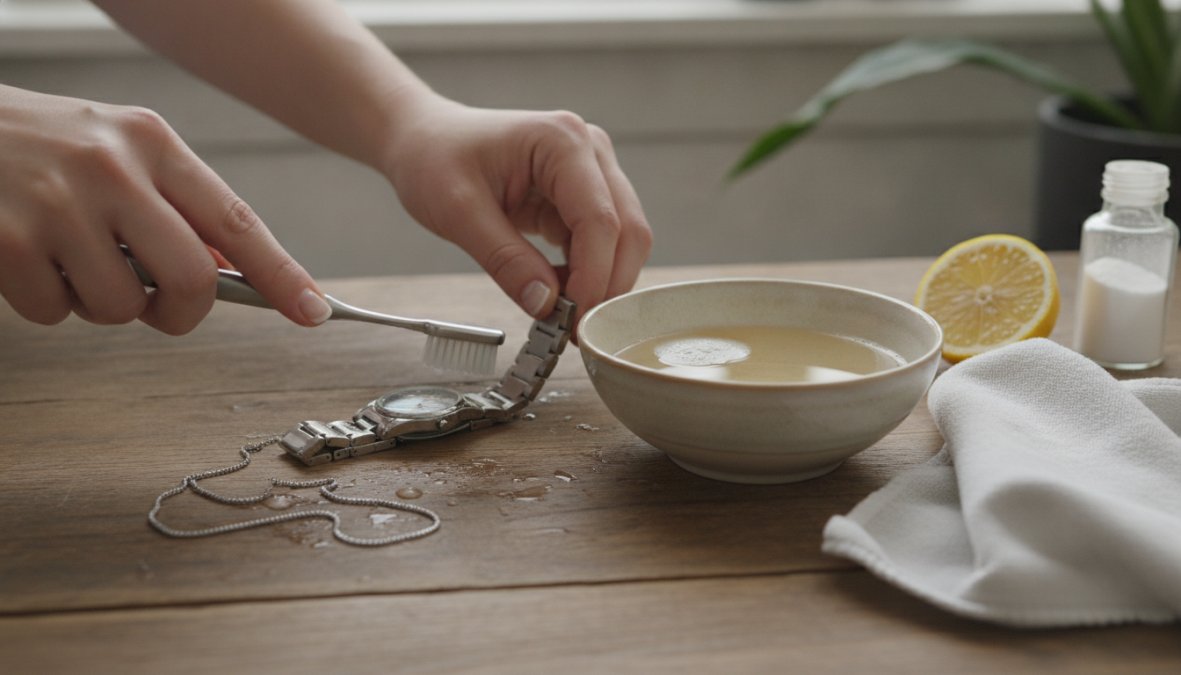
Fill a small bowl with warm water and add 2-3 drops of mild dish soap. The solution should be barely cloudy, not soapy. For stubborn tarnish, add one tablespoon of white vinegar. For jewelry with gemstones, particularly porous stones like pearls or opals, use only warm soapy water and skip the vinegar.
Step 2: Soak Your Jewelry
Place your jewelry in the cleaning solution and let it soak for 5-10 minutes. For heavily tarnished pieces, soak for 15-20 minutes. Don't soak longer than 30 minutes, as prolonged water exposure can weaken solder joints.
Step 3: Gently Scrub
Remove your jewelry and place it on a clean paper towel. Using a soft-bristle toothbrush, gently scrub all surfaces with small circular motions and light pressure, paying special attention to grooves and crevices. For delicate pieces or jewelry with stones, use a cotton ball dampened with the cleaning solution instead, dabbing gently rather than rubbing.
Step 4: Rinse Thoroughly
Hold your jewelry under cool running water and rinse away all soap residue for at least 30 seconds. This step is critical, soap left on the surface will dry and create a dull film. If you used vinegar, rinse extra thoroughly to remove any acidic residue.
Step 5: Dry Your Jewelry
Pat your jewelry gently with a clean microfiber cloth, then buff away any remaining moisture. For intricate pieces, use a cotton swab to dry hard-to-reach areas. Allow your jewelry to air-dry completely for 5-10 minutes before wearing or storing it.
Stainless Steel Jewelry Care: Long-Term Maintenance for Plated vs. Solid
Solid Stainless Steel Maintenance
Solid stainless steel jewelry is remarkably durable and requires minimal special care beyond regular cleaning. Store it in a dry environment, ideally in a jewelry box or soft pouch. For long-term shine, apply a thin layer of olive oil after cleaning using a cotton ball, then buff away excess with a clean cloth.
Solid stainless steel handles chlorine and salt water better than plated pieces, but rinse jewelry immediately after swimming. Salt water is particularly harsh because salt crystallizes as water evaporates, creating a corrosive residue.
PVD-Plated Stainless Steel Care
PVD (Physical Vapor Deposition) plating creates a thin, durable colored layer over stainless steel. Never use abrasive scrubbing on plated pieces, the plating is typically only 2-5 microns thick. Use a cotton ball or soft cloth instead. Avoid vinegar on plated pieces, as acidity can weaken the bond between plating and base metal.
Store plated stainless steel separately from solid pieces in a dry environment away from humidity. When plating begins to wear through at high-friction points, you can embrace the two-tone look or have the piece replated by a professional jeweler.
How to Remove Scratches from Stainless Steel Jewelry
Minor Surface Scratches
Many "scratches" are actually dull spots caused by residue or oxidation. Clean the area thoroughly using the five-step process, and the scratch may disappear entirely. For genuine light scratches, use a jewelry polishing cloth designed for stainless steel, rubbing gently in the direction of the grain.
For deeper scratches, a fine-grit polishing compound (2000+ grit) applied with a soft cloth can help. Wipe away residue with a damp cloth and dry thoroughly.
When to Seek Professional Repair
Deep scratches that expose underlying metal, cracks in the structure, or damaged clasps require professional attention. A jeweler can assess whether a piece can be refinished or if component replacement is necessary. For plated jewelry showing significant wear, replating is a cost-effective option.
Using an Ultrasonic Cleaner for Stainless Steel Jewelry
For solid stainless steel without stones, ultrasonic cleaners are safe and effective. Fill with distilled water, add mild dish soap, and run for 5-10 minutes. However, avoid ultrasonic cleaners for plated stainless steel jewelry or pieces with gemstones, vibrations can separate plating or damage delicate stones. Stick with the manual five-step cleaning process for these pieces.
Troubleshooting Specific Stains: Perfume, Lotion, and Sweat
Perfume and Cologne Residue
Perfume contains alcohol and oils that bond to stainless steel and create stubborn residue. Prevention is best: remove jewelry before applying perfume, then wait 30 seconds before putting it back on. For existing buildup, soak in warm soapy water for 10-15 minutes, then scrub gently with a soft-bristle toothbrush. Add white vinegar for stubborn residue.
Lotion and Sunscreen Buildup
Sunscreen and body lotion create a film on the metal surface. Soak your jewelry in warm soapy water for 5-10 minutes, then gently scrub with a soft-bristle toothbrush. Add white vinegar for stubborn residue. Rinse thoroughly for at least 30 seconds.
Sweat and Salt Accumulation
Sweat contains salt, proteins, and oils that accumulate on jewelry worn during exercise. Rinse immediately after exercising with fresh water. For accumulated residue, soak for 10-15 minutes in warm soapy water, then scrub with a soft-bristle toothbrush. For jewelry with heavy sweat exposure, establish a twice-weekly cleaning routine.
Common Mistakes When Cleaning Stainless Steel Jewelry
The most common mistake is using abrasive scrubbers or harsh chemicals. Steel wool and aggressive polishing scratch the surface and create grooves that trap dirt. Bleach and chlorine-based cleaners pit stainless steel permanently.
Another frequent error is leaving jewelry wet after cleaning. Water spots form when mineral-rich water evaporates, leaving deposits that dull the finish. Always dry immediately with a microfiber cloth.
Many people also soak plated jewelry in vinegar for extended periods. While brief exposure is safe, prolonged soaking weakens the bond between plating and base metal. Keep soaking times short, no more than 15-20 minutes.
Storing stainless steel jewelry in humid environments accelerates oxidation. Bathrooms are particularly problematic. Store jewelry in a dry bedroom or closet instead, ideally in a jewelry box or soft pouch.
Finally, avoid the temptation to "set and forget" your jewelry. Weekly cleaning takes just minutes and prevents problems from developing. Consistency matters far more than intensity.
Keeping your stainless steel jewelry clean and well-maintained ensures these pieces remain beautiful keepsakes for years to come. The simple five-step cleaning process works for nearly every situation. For jewelry that carries sentimental value, proper care is an investment in longevity. Start with weekly cleaning, adjust based on your jewelry's exposure to sweat and chemicals, and your collection will maintain its shine and durability for decades.
Frequently Asked Questions
Does stainless steel jewelry tarnish or rust?
High-quality stainless steel is corrosion-resistant and does not rust easily, but it can develop oxidation or tarnish over time, especially if exposed to chlorine, bleach, or harsh chemicals. Regular cleaning with mild dish soap and warm water helps prevent oxidation and maintains the jewelry's shine and luster. Solid stainless steel is more resistant than PVD-plated varieties, which require gentler care.
What household items can I use to clean stainless steel jewelry safely?
Mild dish soap mixed with warm water is the safest and most effective DIY cleaning method. For tarnish removal, white vinegar works well, soak your jewelry for 15-20 minutes, then scrub gently with a soft-bristle toothbrush. Olive oil can restore shine after cleaning. Always pat dry with a microfiber cloth afterward. Avoid abrasive cleaners, bleach, and toothpaste, as these can damage the surface and cause scratches.
How often should I clean my stainless steel jewelry?
Clean stainless steel jewelry weekly if worn daily, or monthly if worn occasionally. Jewelry exposed to sweat, perfume, lotion, or salt water should be cleaned immediately after wear to prevent residue buildup and oxidation. More frequent cleaning extends the durability and maintains the jewelry's luster, especially for personalized or sentimental pieces you want to keep looking like new for years.
Can I use an ultrasonic cleaner on all stainless steel jewelry?
Ultrasonic cleaners are safe for solid stainless steel jewelry and very effective at removing residue and tarnish. However, avoid using them on PVD-plated stainless steel, delicate engravings, or jewelry with adhesive stones, as the vibrations can damage the plating or dislodge components. For intricate or personalized pieces, gentle hand-cleaning with mild dish soap is safer and just as effective.
This article was written using GrandRanker


