


Table of Contents
- Understanding Durable Jewelry for Everyday Wear
- Best Metals for Everyday Jewelry: Durability Compared
- Most Durable Gemstones for Daily Wear
- Hypoallergenic Durable Jewelry: Materials That Won't Irritate Skin
- Jewelry Care Tips for Longevity and Lasting Beauty
- Repairability and Lifetime Warranties: Long-Term Investment Protection
- Choosing Durable Jewelry That Fits Your Lifestyle
- Conclusion: Investing in Jewelry That Lasts
Durable Jewelry for Everyday Wear: A Complete Guide
Last Updated: July 24, 2026
When you invest in durable jewelry for everyday wear, you're choosing a piece that will survive your actual life. At Flogaze, we understand that the right jewelry needs to withstand daily activities, resist tarnish and corrosion, and maintain its beauty for years. This guide covers the materials, care practices, and investment principles that separate jewelry designed to last from pieces that fade or break within months.
Understanding Durable Jewelry for Everyday Wear
Durability in jewelry refers to a piece's ability to resist scratching, bending, breaking, and chemical degradation while maintaining structural integrity and appearance after months or years of constant wear. According to the Gemological Institute of America's durability standards, hardness alone doesn't guarantee longevity, a gemstone can be hard but brittle, scratching little but cracking easily under impact.
A piece you wear constantly becomes part of your identity. If it tarnishes, breaks, or requires constant polishing, it stops serving its purpose. The real cost of cheap jewelry isn't the initial price, it's the replacement cycles and lost sentimental value when a gift fails to last.
Best Metals for Everyday Jewelry: Durability Compared
Solid Gold, Gold-Filled, and Gold Vermeil
Solid gold remains the gold standard for durable jewelry. Pure 24-karat gold is too soft for everyday wear; jewelry-grade gold is alloyed with other metals. 18-karat gold (75% gold) offers excellent durability and color, while 14-karat gold (58% gold) provides superior strength with slightly less pure gold content.
The difference between solid gold, gold-filled, and gold vermeil matters significantly for longevity. Solid gold pieces maintain their value and never wear through to base metal. Gold-filled jewelry has a thick layer of gold bonded to a base metal core, typically lasting 10-30 years with normal wear. Gold vermeil has a thinner gold layer (minimum 2.5 microns) over sterling silver and may show base metal within 1-3 years if worn daily or exposed to moisture.
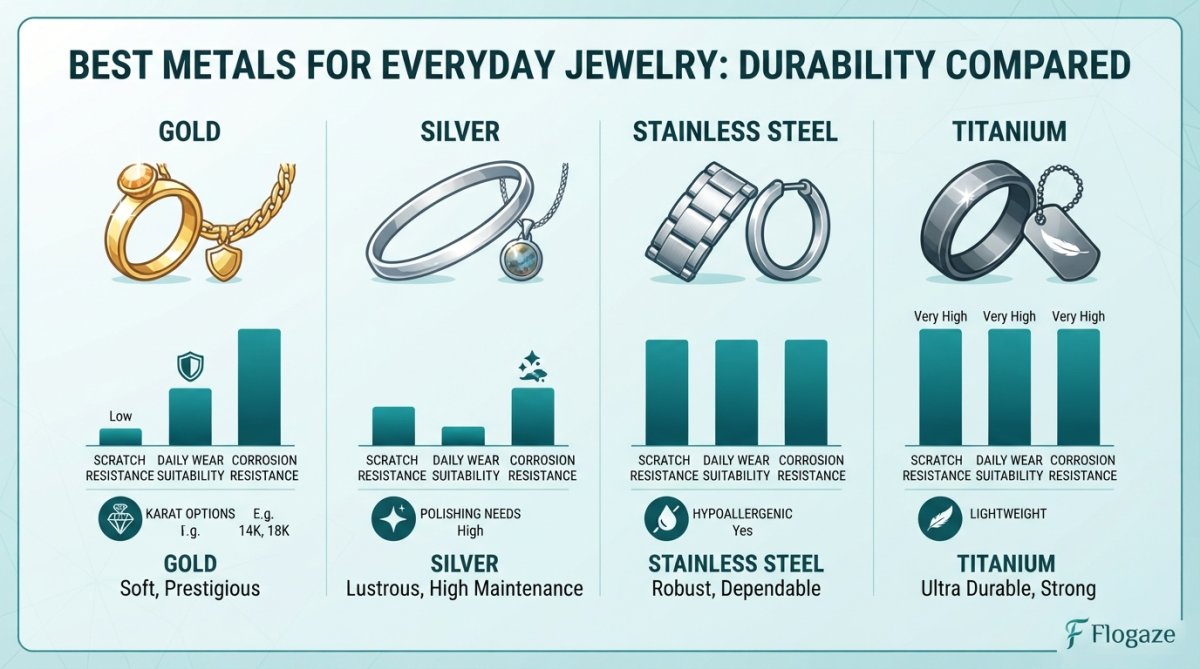
For durable everyday wear, 14-karat solid gold offers the best balance of durability, color retention, and value. Gold-filled pieces work well for those seeking affordability without sacrificing longevity, just avoid daily water exposure.
Sterling Silver, Stainless Steel, and Platinum Alternatives
Sterling silver (92.5% pure silver) is a classic choice but requires understanding its limitations. Silver tarnishes when exposed to sulfur compounds, though this is cosmetic and doesn't damage the metal. For everyday wear, sterling silver works if you're committed to maintenance.
Stainless steel offers superior durability for everyday wear. It resists tarnish, corrosion, and discoloration far better than silver. Surgical-grade stainless steel (316L) is hypoallergenic and nearly maintenance-free, though it has a cooler appearance than precious metals.
Platinum is nearly indestructible, hypoallergenic, and doesn't tarnish, but costs 8-15 times more than comparable gold pieces. Titanium is lightweight, hypoallergenic, and durable, though difficult to resize. Tungsten is exceptionally hard and scratch-resistant but brittle and cannot be resized.
Most Durable Gemstones for Daily Wear
Hardness, Toughness, and Stability in Daily Life
Gemstone durability depends on three properties: hardness (resistance to scratching on the Mohs scale), toughness (resistance to breaking under impact), and stability (response to temperature changes, light, and moisture).
Diamond ranks 10 on the Mohs scale with excellent toughness. Sapphire and ruby (both corundum) rank 9 and are exceptionally durable. Emerald ranks only 7.5-8 and is more brittle, requiring careful handling.
For everyday wear, prioritize gemstones ranking 8 or higher on the Mohs scale. Sapphires and rubies offer the same durability as diamonds with distinctive color. Moissanite, a lab-created stone, ranks 9.25 and offers diamond-like brilliance at a fraction of the cost. Avoid opal, tanzanite, and aquamarine for daily-wear rings or bracelets, as these are porous or brittle and can crack with exposure to water and temperature changes.
Hypoallergenic Durable Jewelry: Materials That Won't Irritate Skin
Metal Reactivity and Skin Chemistry
Your skin's chemistry matters more than most people realize. Nickel is the most common culprit for allergic reactions, causing redness, itching, or dermatitis. Nickel appears in many gold alloys (especially white gold), silver alloys, and plated jewelry.
Sterling silver is generally safe, though some contains nickel. Stainless steel (316L grade) is hypoallergenic for most people. Platinum, titanium, and niobium are naturally hypoallergenic. Solid gold above 14-karat is typically safe for sensitive skin.
Nickel-Free and Hypoallergenic Certifications
When shopping for hypoallergenic durable jewelry, look for explicit nickel-free certifications. Research from the American Academy of Dermatology confirms that nickel sensitivity affects 10-15% of the population. If you have sensitive skin, invest in solid gold (14K or higher), platinum, or certified nickel-free stainless steel.
Jewelry Care Tips for Longevity and Lasting Beauty
Cleaning, Storage, and Daily Maintenance Routines
Proper care extends the lifespan of durable jewelry significantly. For solid gold and gold-filled pieces, use warm soapy water with a soft brush. Avoid ultrasonic cleaners and steam. For sterling silver, use a silver cloth or mild polish monthly. For stainless steel, soap and water suffice.
Storage matters as much as cleaning. Keep jewelry in a dry environment in individual compartments to prevent tangling and scratching. Avoid humid bathrooms and direct sunlight. For long-term storage, use acid-free tissue, never plastic bags.
Remove jewelry before swimming, showering, or applying lotions and perfumes. Chlorine and salt water accelerate tarnishing and can weaken settings.
Activity-Specific Durability: Showers, Swimming, and Workouts
Solid gold withstands daily showers and occasional swimming, but remove it before pools and ocean swims. Stainless steel excels in wet environments, resisting salt water and chlorine. Sterling silver tarnishes faster when exposed to moisture and sweat.
For workouts, remove all jewelry before heavy lifting or contact sports. Sweat accelerates tarnishing, and impact can bend or break pieces. Titanium and tungsten handle sweat better than other metals.
| Activity | Best Metal | Second Choice | Avoid |
|---|---|---|---|
| Daily showering | Stainless steel | 14K solid gold | Sterling silver |
| Swimming (salt/chlorine) | Stainless steel | Titanium | Gold-filled, vermeil |
| Workouts/sports | Titanium or tungsten | Stainless steel | All precious metals |
| Occasional wear | Sterling silver | 14K gold | Plated jewelry |
Repairability and Lifetime Warranties: Long-Term Investment Protection
Why Repairability Matters More Than Initial Price
A $200 piece that cannot be repaired becomes worthless when damaged. A $500 piece that a skilled jeweler can service for decades remains valuable. Solid gold and platinum pieces are highly repairable, a jeweler can resize them, replace stones, repair joints, and refinish surfaces. Plated jewelry is nearly impossible to repair.
Modern materials like titanium and tungsten create repairability challenges. Titanium cannot be soldered with traditional methods. Tungsten cannot be resized because it's too hard to work. The best durable jewelry balances material quality with repairability.
What to Look for in Warranty Coverage
Quality warranties typically cover defective solder joints, stone setting failures, and manufacturing flaws. They usually exclude normal wear, damage from misuse, and water damage from negligence. A lifetime warranty on manufacturing defects is valuable.
Ask whether the warranty covers resizing, re-plating, or refinishing. Flogaze offers warranty coverage on its personalized jewelry pieces, reflecting the brand's commitment to creating lasting keepsakes. Prioritize jewelers who stand behind their work with clear, comprehensive warranties.
Choosing Durable Jewelry That Fits Your Lifestyle
Matching Material Durability to Your Daily Activities
The most durable metal fails if it doesn't match your lifestyle. Start by assessing your daily activities. If you shower and swim frequently, stainless steel or solid gold outperforms sterling silver. If you work with your hands or exercise intensely, titanium or tungsten handles impact better. If you travel frequently or wear jewelry constantly, low-maintenance stainless steel reduces stress.
Consider your skin chemistry and tolerance for maintenance. Sterling silver is beautiful but requires regular polishing. Stainless steel demands almost no upkeep. If you're unlikely to polish jewelry regularly, choose low-maintenance metals.
Quality Indicators: What Separates Affordable Luxury From Fast Fashion
Examine weight, real gold and stainless steel pieces feel substantial. Feel the clasp; quality clasps are secure and smooth. Look at solder joints; they should be clean and invisible. Check for hallmarks: solid gold carries a karat mark (14K, 18K), sterling silver shows "925," stainless steel shows "316L."
Research the jeweler's reputation and how long they've been in business. A jeweler willing to explain their sourcing and construction methods signals confidence in their product.
Flogaze demonstrates quality indicators through its use of high-quality stainless steel construction, water-resistant design, and included gift packaging. These details signal a brand committed to durability and customer experience, hallmarks of jewelry designed to become a lasting keepsake.
Conclusion: Investing in Jewelry That Lasts
Choosing durable jewelry for everyday wear requires balancing material science, lifestyle compatibility, and long-term value. The right piece doesn't just survive your daily routine, it becomes more meaningful with time.
When you select jewelry intended to last decades, you're making an investment in both quality and sentiment. Flogaze specializes in creating personalized jewelry pieces crafted from high-quality stainless steel and designed to withstand constant wear while maintaining their beauty. Each piece arrives ready to gift, backed by thoughtful construction that prioritizes durability for everyday moments. Whether you're selecting a piece for yourself or as a meaningful gift, choosing materials and craftsmanship designed to endure transforms jewelry from a temporary accessory into a lasting keepsake. Explore Flogaze's collection and discover pieces built to celebrate your life's most meaningful moments for years to come.
Frequently Asked Questions
What are the best metals for durable jewelry for everyday wear?
Solid gold, platinum, and stainless steel rank among the most durable metals for daily wear. Solid gold resists tarnish and corrosion naturally, while platinum offers exceptional strength and longevity. Stainless steel provides tarnish-resistant, affordable durability. Sterling silver requires more maintenance but remains a classic choice when properly cared for. Titanium and tungsten offer hypoallergenic, scratch-resistant alternatives ideal for active lifestyles. Your choice depends on budget, lifestyle, and skin sensitivity.
What is hypoallergenic durable jewelry, and who needs it?
Hypoallergenic durable jewelry combines materials that resist corrosion and oxidation with metals that don't trigger allergic reactions. Nickel-free metals like titanium, surgical stainless steel, platinum, and solid gold are excellent choices. People with sensitive skin, nickel allergies, or metal reactivity benefit most from these options. Even high-quality pieces can cause irritation if the metal reacts with your skin chemistry, so hypoallergenic materials ensure both longevity and comfort for everyday wear without tarnishing or causing dermatitis.
How do I care for durable jewelry to keep it lasting for years?
Regular maintenance preserves jewelry durability significantly. Clean pieces gently with a soft cloth and mild soap weekly, avoiding harsh chemicals. Store jewelry separately to prevent scratching and tangling. Remove pieces before swimming, showering, or exercising to minimize exposure to chlorine, saltwater, and sweat, all accelerate tarnish and corrosion. For sterling silver, use tarnish-resistant storage or polishing cloths. Check clasps and chains periodically for wear. Professional cleaning and inspection annually extend the life of your collection and catch damage early before it becomes costly.
Can I wear jewelry every day in the shower or while swimming?
Most durable metals tolerate occasional water exposure, but extended contact with chlorine, saltwater, and soap accelerates tarnish and corrosion. Stainless steel, solid gold, and platinum handle daily shower wear better than sterling silver. Waterproof doesn't mean damage-proof, remove jewelry before swimming or prolonged water activities. Gemstones vary in durability; diamonds and sapphires withstand water, while softer stones like opals or pearls require extra protection. Activity-specific durability means matching your jewelry to your lifestyle. If you swim regularly, choose stainless steel or solid gold pieces designed for water exposure rather than delicate sterling silver options.
This article was written using GrandRanker


