


Table of Contents
- How to Verify Stainless Steel Jewelry Quality: A Step-by-Step Guide
- Step 1: Check for Markings and Hallmarks on Your Piece
- Step 2: Perform the Magnet Test
- Step 3: Conduct a Visual Inspection of Color, Shine, and Finish
- Step 4: Use the Acid Test to Identify Fake Stainless Steel Jewelry
- Step 5: Perform the Scratch and Weight Tests
- Understanding Stainless Steel Composition and Corrosion Resistance
- How to Clean Stainless Steel Jewelry and Prevent Tarnish
Last Updated: July 23, 2026
How to Verify Stainless Steel Jewelry Quality: A Step-by-Step Guide
Learning how to verify stainless steel jewelry quality is essential before purchasing personalized pieces meant to last a lifetime. The difference between authentic, durable stainless steel and counterfeit or low-grade alloys can mean the difference between a cherished keepsake that withstands daily wear and a piece that degrades within months.
This guide walks you through seven practical tests you can perform at home, plus professional verification methods, to ensure you're getting genuine, high-quality stainless steel. You'll learn what markings to look for, how simple tools like magnets and vinegar reveal the truth about a piece, and why composition matters for long-term durability.
What You'll Need for At-Home Testing
Gather these simple tools, most are household items you likely already own:
- A strong neodymium magnet
- White vinegar or fresh lemon juice
- A magnifying glass for reading hallmarks
- A small scratch test tool (ceramic plate edge or jewelry testing tool)
- A scale that measures in grams (optional)
- A well-lit workspace
Step 1: Check for Markings and Hallmarks on Your Piece
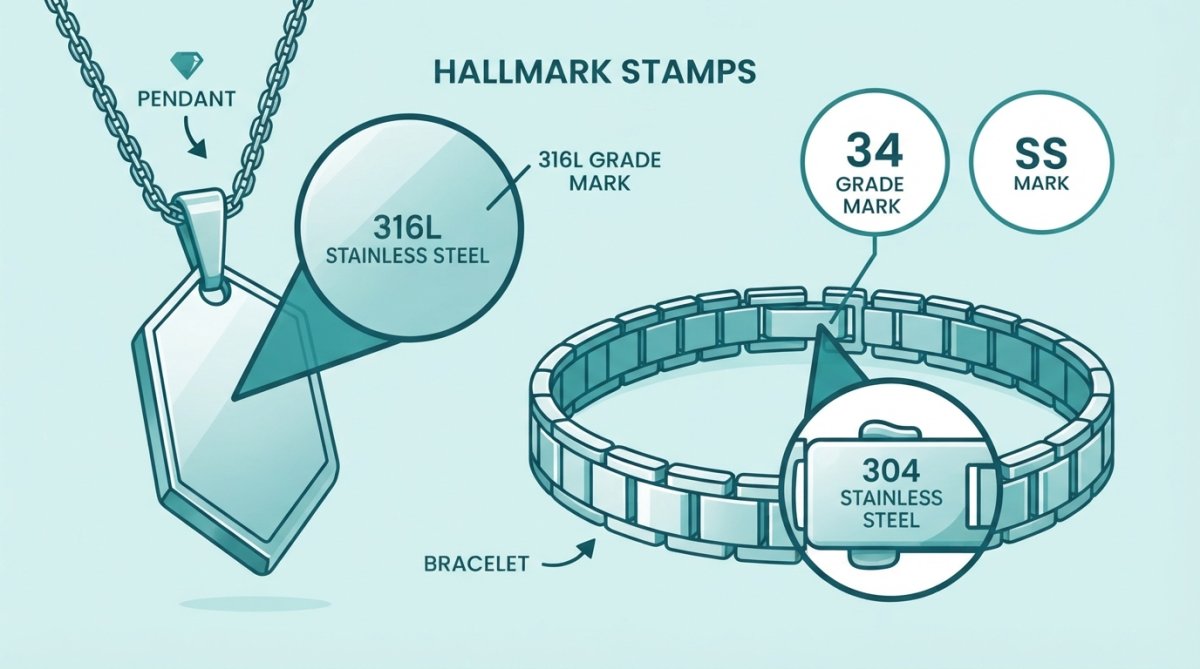
The fastest way to verify stainless steel jewelry quality is to look for proper hallmarks stamped directly onto the metal. Examine the clasp, back of a pendant, inner band of a ring, or underside of a bracelet. Use your magnifying glass to look for stamps showing "SS," "316L," "304," "316," or "surgical steel." These markings should be clear, consistent, and not smudged or poorly pressed.
The absence of any hallmark is concerning. Reputable jewelry makers stamp their pieces. Flogaze personalized jewelry always includes proper hallmarks so you can verify authenticity the moment you receive your piece.
Understanding 316L vs. 304 Stainless Steel Markings
316L stainless steel is the superior choice for jewelry. The "L" stands for "low carbon," which means it's less prone to corrosion and discoloration over time. It contains chromium, nickel, and molybdenum, three elements that work together to prevent rust and tarnish even with daily wear and exposure to sweat, water, and humidity. This is the grade you want for pieces meant to last decades.
304 stainless steel is a step down. It still resists corrosion well and is durable, but it lacks the molybdenum that makes 316L superior. Over years of constant contact with skin and moisture, 304 pieces may eventually show surface discoloration or minor rust spots.
If a seller doesn't specify the grade and just says "stainless steel," assume it's 304. Always ask: "Is this 316L or 304?" Surgical-grade stainless steel typically refers to 316L or 316, making it hypoallergenic and safe for sensitive skin.
Step 2: Perform the Magnet Test
The magnet test is one of the most revealing ways to verify stainless steel jewelry quality in seconds. Take your strong neodymium magnet and hold it near the jewelry piece. Genuine 316L stainless steel should NOT be attracted to the magnet, or the attraction should be extremely weak. If the magnet pulls strongly to the piece, you're likely looking at lower-grade stainless steel or a completely different metal like plated brass or iron.
The reason: 316L contains specific ratios of chromium, nickel, and molybdenum that make it austenitic, a non-magnetic form of stainless steel. When a magnet sticks strongly to jewelry claiming to be stainless steel, it suggests either the metal is 304 or it's not stainless steel at all.
Step 3: Conduct a Visual Inspection of Color, Shine, and Finish
Authentic stainless steel jewelry displays a consistent, uniform color, typically a bright silvery tone for polished pieces or a matte appearance for brushed finishes. If some areas are noticeably darker, duller, or have a yellowish or greenish tint, the piece may be plated or made from an inferior alloy that's already oxidizing.
Examine the shine and reflectivity. High-quality stainless steel has a clean, bright shine when polished. Check the craftsmanship of welds, joints, and connection points, rough, bumpy, or poorly finished welds indicate careless manufacturing and often correlate with cheaper materials. Run your finger along edges and over the surface. It should feel smooth, not rough or grainy.
Step 4: Use the Acid Test to Identify Fake Stainless Steel Jewelry
Acid testing is a more definitive way to verify stainless steel jewelry quality. The acid reacts differently to different metals, revealing true composition beneath any plating or misleading claims.
Vinegar and Lemon Juice Tests
The vinegar test: Place a few drops of white vinegar on an inconspicuous area of the jewelry (the back of a pendant, underside of a ring, or inner clasp). Let it sit for 2-3 minutes. Genuine stainless steel will show no reaction, no discoloration, no bubbling. If the metal begins to discolor, rust, or bubble, the piece is not true stainless steel. Wipe the vinegar away immediately with a damp cloth and dry thoroughly.
The lemon juice test: Fresh lemon juice works similarly. Apply a small amount to a hidden area and wait 3-5 minutes. True stainless steel resists the acidity and shows no reaction. A reaction indicates the piece is either plated, made of low-grade alloy, or counterfeit.
Professional Nitric Acid Testing
For absolute certainty, professional jewelry appraisers use diluted nitric acid. On stainless steel, a drop should produce no visible reaction or only slight color change. Only a certified jewelry appraiser should perform this test. For high-value personalized jewelry or heirloom pieces, paying for professional nitric acid testing ($20-50 per piece) is worthwhile insurance.
Step 5: Perform the Scratch and Weight Tests
The scratch test: Using a ceramic plate (unglazed back edge) or specialized scratch test tool, gently scratch a hidden area of the jewelry. Genuine stainless steel resists scratching and shows minimal marks. If the metal scratches easily, flakes, or reveals a different-colored material underneath, the piece is not solid stainless steel.
The weight test: Stainless steel has a specific density. Pieces that feel unusually light for their size may be hollow, plated, or made from a lighter alloy. If you have a scale, weigh the piece and research the expected weight for that style and size. Significant discrepancies suggest the piece is not solid stainless steel.
Understanding Stainless Steel Composition and Corrosion Resistance
To truly verify stainless steel jewelry quality, you need to understand what makes some stainless steel superior. Stainless steel is an alloy combining iron, chromium, and other elements. The ratios determine durability, corrosion resistance, and long-term appearance.
Iron is the base element (typically 65-75%). Chromium makes it "stainless" by forming a protective oxide layer that prevents rust. Nickel adds strength and improves corrosion resistance, especially in humid or salty environments. Molybdenum enhances resistance to pitting and crevice corrosion, crucial for jewelry exposed to sweat and moisture.
Chromium, Nickel, and Molybdenum: What They Mean for Quality
Chromium creates the corrosion-resistant layer. Higher chromium content (typically 16-18% in quality stainless steel) means better protection. Lower-grade pieces may contain as little as 12% chromium, offering less protection against tarnish and discoloration over time.
Nickel adds shine, hardness, and further corrosion resistance. However, some people have nickel allergies. Surgical-grade stainless steel (316L) is hypoallergenic because it uses nickel in a locked molecular structure that doesn't leach into skin. If you have sensitive skin or a known nickel allergy, verify the piece is specifically labeled as hypoallergenic or surgical-grade.
Molybdenum is the element that separates 316L from 304. This element specifically resists pitting corrosion, the small rust spots that develop in high-moisture environments. For daily-wear jewelry, molybdenum is essential.
A high-quality stainless steel jewelry piece typically contains 16-18% chromium, 8-10% nickel, 2-3% molybdenum (in 316L; absent in 304), trace amounts of carbon, manganese, and silicon, with the remainder being iron.
How to Clean Stainless Steel Jewelry and Prevent Tarnish
Even high-quality stainless steel jewelry requires proper care to maintain its appearance.
Regular cleaning: Use warm water, mild dish soap, and a soft cloth. Gently scrub the piece, paying special attention to crevices and under settings. Dry immediately with a soft, lint-free cloth.
For stubborn tarnish: Create a paste of baking soda and water, apply it to the piece, let it sit for 5 minutes, then scrub gently with a soft brush. Rinse thoroughly and dry.
Avoid harsh chemicals: Never use bleach, acetone, or aggressive chemical cleaners on stainless steel jewelry. Avoid prolonged exposure to chlorine and salt water without rinsing immediately afterward.
Storage matters: Store jewelry in a cool, dry place. In humid climates, consider storing pieces in a container with a silica gel packet.
Caring for Surgical Grade and Marine Grade Pieces
Surgical-grade stainless steel (typically 316L or 316) and marine-grade stainless steel (also 316L) are designed for high-stress environments. Surgical-grade pieces can be worn during showering and swimming, though rinsing immediately afterward is recommended. The hypoallergenic properties mean they're safe for sensitive skin and can be worn continuously.
Marine-grade stainless steel is specifically formulated to resist saltwater corrosion. If you live near the ocean or frequently swim in salt water, marine-grade is worth the investment.
Choosing personalized jewelry meant to commemorate life's most important moments deserves careful verification. When you invest in a piece to celebrate an anniversary, graduation, or family milestone, you want to know it will withstand daily wear and remain beautiful for decades. Flogaze personalized jewelry is crafted from verified 316L surgical-grade stainless steel, includes proper hallmarks, and is designed to endure constant use without tarnish or discoloration. Each piece arrives ready to gift directly to your loved one, backed by the confidence that you're giving them a genuine, durable keepsake. Shop now and verify that your next meaningful gift is built to last.
Supporting Evidence and Sources
According to the Gemological Institute of America's jewelry materials guide, stainless steel alloys used in jewelry must meet specific composition standards to be marketed as corrosion-resistant. The distinction between 304 and 316L grades directly impacts long-term durability, particularly for pieces exposed to moisture and salt environments.
Research from the American Society for Testing and Materials (ASTM) standards for stainless steel confirms that 316L stainless steel, with its molybdenum content, provides superior corrosion resistance compared to 304 grades, especially in chloride-rich environments. This is why surgical-grade stainless steel (316L) is the material of choice for both medical devices and high-quality jewelry.
The Federal Trade Commission's guidelines on jewelry labeling and metal content claims require sellers to accurately disclose the metal composition and grade of jewelry. If a seller claims stainless steel but cannot specify whether it's 304 or 316L, or cannot provide hallmark documentation, this violates FTC standards and is a red flag for counterfeit or misrepresented products.
Frequently Asked Questions
How can you tell if stainless steel jewelry is good quality?
Good quality stainless steel jewelry exhibits clear hallmarks (such as 316L or 304), shows a consistent shine and smooth finish, passes the magnet test (non-magnetic or weakly magnetic), and resists tarnishing and corrosion. Check for proper craftsmanship in welds and clasps, verify seller transparency about materials and composition, and confirm the piece feels appropriately weighted for its size. Real stainless steel won't easily scratch or show discoloration when tested with vinegar or lemon juice.
What's the difference between 316L and 304 stainless steel jewelry?
316L stainless steel jewelry contains molybdenum, which enhances corrosion resistance and makes it ideal for sensitive skin and everyday wear, it's often called surgical grade. 304 stainless steel is more affordable but offers less corrosion resistance and may cause tarnishing over time. For personalized jewelry intended as lasting keepsakes, 316L is the superior choice because it resists discoloration and maintains its appearance through constant use and exposure to moisture.
How can you identify fake stainless steel jewelry?
Fake stainless steel jewelry often fails the magnet test (it's too strongly magnetic), lacks proper hallmarks or has unclear markings, shows rapid tarnishing or color changes, and may have poor craftsmanship in clasps and welds. The acid test using vinegar or lemon juice reveals fakes, real stainless steel resists these mild acids without discoloration. If a seller won't provide material transparency or product descriptions detailing composition, that's a red flag. Professional jewelry appraisal can confirm authenticity when purchasing high-value pieces.
Does stainless steel jewelry rust or tarnish?
Quality stainless steel jewelry with proper chromium and nickel composition resists rust and tarnishing due to its corrosion resistance properties. However, lower-grade stainless steel (like 304) or pieces with PVD coating or plating may tarnish over time, especially with exposure to moisture or sweat. 316L stainless steel, which includes molybdenum, offers superior tarnish resistance. Regular cleaning with mild soap and water, and proper storage away from moisture, helps maintain your piece's finish and prevents discoloration.
This article was written using GrandRanker


