


Table of Contents
- Why Verifying Stainless Steel Quality Matters for Your Purchases
- The Magnet Test for Stainless Steel: What It Reveals and Doesn't
- Visual Inspection and Surface Finish Assessment
- Chemical Testing: The Nitric Acid Test Explained
- Understanding Stainless Steel Grades: 304 vs. 316 and Beyond
- Corrosion Resistance Testing for Stainless Steel
- Mill Test Certificates: Your Paper Trail to Authenticity
- Portable XRF Analysis and Professional Verification Methods
Verify Stainless Steel Quality: 7 Tests That Work
Last Updated: July 25, 2026
When investing in quality items, personalized jewelry from Flogaze, cookware, or tools, knowing how to verify stainless steel quality is essential. "Stainless steel" is a broad category, and not all grades are equal. Some alloys resist corrosion for decades; others tarnish or rust within months. The difference comes down to grade, nickel content, and manufacturing quality, details often hidden from product listings.
This guide covers seven practical methods to verify stainless steel quality, from simple magnet tests to professional-grade analysis. You'll learn which tests work best for different situations, what they reveal, and where they fall short.
Why Verifying Stainless Steel Quality Matters for Your Purchases
A piece labeled "stainless steel" might be authentic 304-grade material lasting decades, or a lower-grade alloy corroding within months. Quality stainless steel resists oxidation and maintains its silvery sheen through years of use. Inferior grades develop rust spots and discoloration. For personalized jewelry from Flogaze designed as family heirlooms, verifying material quality ensures your sentimental investment lasts as promised.
Many online marketplaces feature counterfeit stainless steel products. Sellers may misrepresent grade, nickel content, or composition entirely. Understanding verification methods helps you spot red flags before purchasing.
The Magnet Test for Stainless Steel: What It Reveals and Doesn't
The magnet test is the fastest verification method. Hold a strong neodymium magnet near the item. If it sticks strongly, the material is likely ferritic stainless steel or carbon steel. If the magnet shows no attraction or weak attraction, you're probably looking at austenitic stainless steel.
Austenitic grades like 304 and 316, the most common food-grade and jewelry-grade stainless steels, are non-magnetic or weakly magnetic. Ferritic stainless steel, used in lower-cost applications, is strongly magnetic. Austenitic grades typically offer superior corrosion resistance and durability.
Ferritic vs. Austenitic: Why Magnetism Varies
The difference comes down to crystal structure. Austenitic stainless steel contains nickel, which stabilizes a face-centered cubic lattice, making it non-magnetic. Ferritic stainless steel lacks sufficient nickel and has a body-centered cubic structure, making it magnetic. Martensitic stainless steel, used in knife blades, is also magnetic.
For jewelry, watches, and cookware, you want austenitic grades. Their higher nickel content (typically 8-10% in 304 grade) provides the corrosion resistance that makes them "stainless." A strong magnet response suggests ferritic material, which corrodes more easily.
Common Mistakes That Lead to False Results
A common error is using a weak magnet. Refrigerator magnets often lack the strength to detect subtle magnetism in some austenitic grades. Neodymium magnets give clearer results. Another mistake: testing plated items. If stainless steel is plated with a non-magnetic coating or if a ferritic base is plated with austenitic material, the magnet response becomes unreliable.
The magnet test is best used as a first screening tool, not definitive verification.
Visual Inspection and Surface Finish Assessment
Examine the item closely under good lighting. High-quality stainless steel has a distinctive appearance that's hard to fake.
Look for a smooth, uniform silvery sheen reflecting light evenly without dull patches, discoloration, or visible oxidation. Run your finger across the item; quality stainless steel feels smooth with no rough spots or pitting. Minor casting marks are acceptable if uniform.
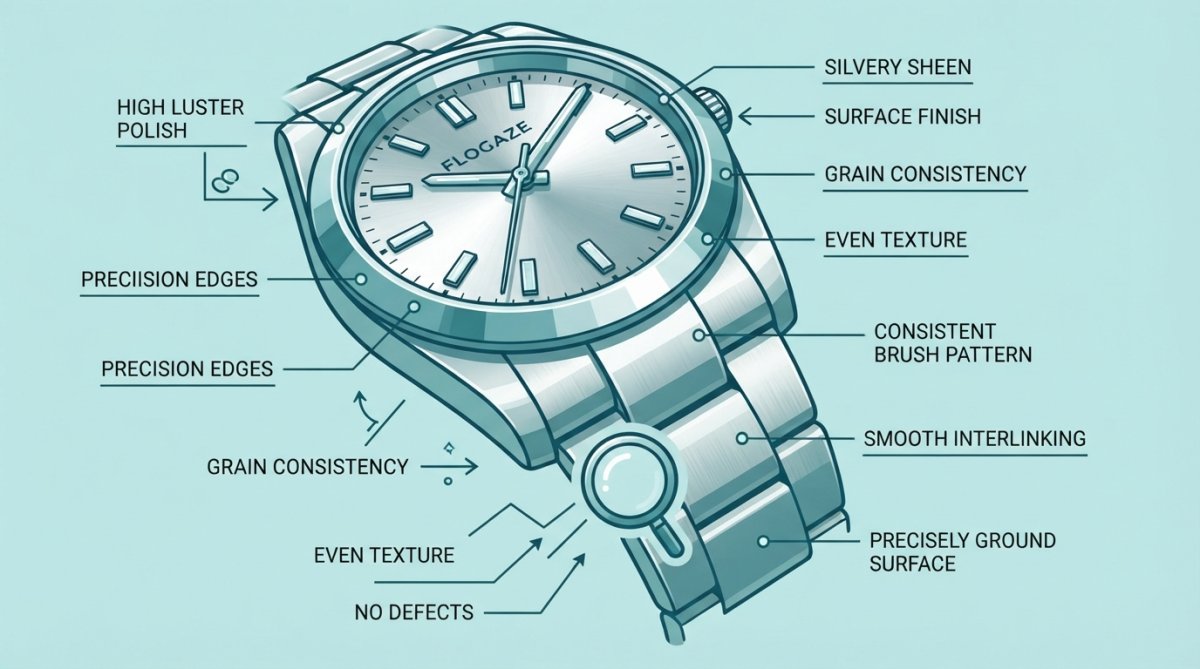
Spotting the Silvery Sheen and Grain Patterns
Authentic stainless steel exhibits a characteristic silvery appearance differing from mild steel or carbon steel, which appear dull or grayish. The sheen should be consistent across the entire piece. Patches of dullness or brownish tint suggest corrosion or non-genuine material.
High-quality stainless steel shows fine, uniform grain patterns when polished, resulting from proper manufacturing and heat treatment. Coarse or irregular grain patterns suggest poor quality.
Identifying Casting Marks and Stamping Quality
Minor casting marks are normal. However, deep gouges or irregular marks suggest careless manufacturing. Check stamping quality: grade markings like "304" or "316" should be crisp and clearly stamped into the material, not painted or labeled. Blurry or peeling stamps suggest counterfeit material.
Chemical Testing: The Nitric Acid Test Explained
The nitric acid test is more definitive. It's based on the passivation layer, a microscopic oxide layer that prevents corrosion on stainless steel.
When nitric acid contacts genuine stainless steel, it reacts with surface impurities but not the stainless steel itself, producing dark discoloration that washes away with distilled water. Mild steel reacts vigorously, producing heat and gas.
To perform this test safely, you need concentrated nitric acid (8M or stronger), a glass or ceramic container, and protective equipment including gloves and eye protection. Apply a small drop to an inconspicuous area. Genuine stainless steel shows dark discoloration that washes away, leaving the material undamaged.
Safety Precautions and Environmental Considerations
Nitric acid is caustic and hazardous. Never test without proper protective equipment: nitrile gloves, safety glasses, and ideally a lab coat. Work in a well-ventilated area or outdoors. Keep water nearby to rinse immediately if acid contacts skin. Dispose of used acid according to local hazardous waste guidelines.
For most consumers, the magnet test combined with visual inspection is sufficient. Reserve chemical testing for high-value purchases where absolute certainty is worth the safety considerations.
Understanding Stainless Steel Grades: 304 vs. 316 and Beyond
Not all stainless steel is the same. Grade designation tells you alloy composition and corrosion resistance.
304 stainless steel is the most common food-grade alloy, containing 18% chromium and 8% nickel. It's used in cookware, jewelry, watches, and kitchen equipment. It resists rust and tarnishing under normal conditions but can pit if exposed to high salt concentrations over extended periods.
316 stainless steel adds molybdenum (2-3%) to the 304 formula, significantly improving corrosion resistance against chlorides and saltwater. It's preferred for marine environments and harsh conditions. 316 is more expensive but offers superior durability.
Other grades exist for specialized purposes: 430 is ferritic and less corrosion-resistant; 440 is martensitic for knife blades. For consumer jewelry, watches, and cookware, 304 and 316 are the standards.
Checking Grade Markings and Stamps
Legitimate stainless steel products are stamped with their grade. On jewelry, look for markings like "304" or "316" stamped inside. On cookware, markings appear on the bottom. Stamps should be crisp and clearly legible. Faint or painted markings are warning signs.
If an item carries no grade marking, treat it with skepticism. High-quality manufacturers stamp their products.
The Role of Nickel Content in Durability
Nickel is key to austenitic stainless steel's corrosion resistance. It stabilizes the crystal structure and prevents rust. 304-grade contains roughly 8% nickel; 316 contains similar amounts plus molybdenum.
For most jewelry and cookware, 304's 8% nickel is sufficient. However, nickel can cause allergic reactions in sensitive individuals. Some manufacturers offer nickel-free alternatives.
Corrosion Resistance Testing for Stainless Steel
You can assess corrosion resistance through practical observation requiring no chemicals or special equipment.
Distilled Water and Passivation Tests
Apply distilled water to a small, inconspicuous area and observe over days or weeks. Genuine stainless steel shows no rust or discoloration when exposed to pure water. Mild steel or low-grade stainless will show rust spots within hours or days.
This test is passive and safe: simply apply distilled water, cover loosely to slow evaporation, and check daily. Genuine 304 or 316 stainless will remain unchanged. Inferior materials will show visible oxidation.
Mill Test Certificates: Your Paper Trail to Authenticity
For high-value purchases, the strongest proof of quality is a mill test certificate (material test certificate or MTC). This official document from the manufacturer specifies exact alloy composition, heat treatment, mechanical properties, and testing results.
A legitimate mill test certificate includes:
- Material grade (304, 316, etc.)
- Chemical composition percentages
- Mechanical properties (tensile strength, yield strength, elongation)
- Test method and standards followed
- Manufacturer's name and batch/lot number
- Date of testing and certification
When purchasing personalized jewelry from Flogaze or any high-end stainless steel item, ask the seller for a mill test certificate. Reputable manufacturers provide them. Counterfeiters rarely have access to legitimate certificates.
Portable XRF Analysis and Professional Verification Methods
For serious verification, portable X-ray fluorescence (XRF) analyzers offer professional-grade certainty. These handheld devices use X-rays to identify elemental composition non-destructively in seconds, confirming whether material is 304, 316, or another grade.
XRF analyzers range from entry-level consumer models ($1,000-$2,000) to professional instruments ($5,000+). Some jewelry stores and testing labs offer XRF testing for $20-$50 per item.
When DIY Testing Isn't Enough
For high-value personalized pieces, luxury watches, or large quantities of stainless steel, professional XRF testing is worth the investment. For lower-cost items, the combination of magnet test, visual inspection, and distilled water exposure is usually sufficient.
| Verification Method | Cost | Time Required | Certainty Level | Best For |
|---|---|---|---|---|
| Magnet test | Free | 1 minute | Medium | Quick screening |
| Visual inspection | Free | 5-10 minutes | Medium | Spotting obvious flaws |
| Distilled water test | $1-5 | Several days | High | Safe home verification |
| Nitric acid test | $10-30 | 5 minutes | Very High | Definitive confirmation |
| Mill test certificate | Free (from seller) | N/A | Absolute | High-value purchases |
| XRF analysis | $20-50 per item | 1-2 minutes | Absolute | Professional verification |
When investing in quality items designed to last, verifying stainless steel quality is time well spent. A few simple tests, starting with the magnet and moving to visual inspection, quickly reveal whether you have genuine, durable material or a counterfeit. For significant purchases like personalized jewelry from Flogaze, which combines high-quality 316 stainless steel construction with meaningful customization, requesting a mill test certificate or conducting XRF analysis provides absolute certainty. Your keepsakes deserve materials that will withstand decades of wear and remain beautiful for generations to come.
Frequently Asked Questions
Is the magnet test reliable for verifying stainless steel quality?
The magnet test has limits. Austenitic stainless steel (like 304 grade) is non-magnetic, while ferritic grades are magnetic. However, some high-nickel austenitic alloys may show slight magnetism when cold-worked. A magnet test alone cannot verify quality, use it as a first screening step combined with visual inspection, grade markings, or chemical testing for reliable verification of stainless steel quality.
How can you tell if stainless steel is 304 or 316 grade?
Check stamped markings or tags on the product, legitimate items display grade numbers. 316 stainless steel contains higher nickel and molybdenum content, offering superior corrosion resistance in saltwater environments. Visual inspection alone cannot distinguish them; you need grade markings, material certifications, or XRF analysis. When buying personalized jewelry or watches, request a mill test certificate from the seller to confirm the exact stainless steel grade.
What should I look for in a mill test certificate for stainless steel?
A genuine mill test certificate (MTC) shows the stainless steel grade, chemical composition (chromium, nickel, molybdenum percentages), tensile strength, and the manufacturer's details. It's typically provided by reputable suppliers and manufacturers. For personalized gifts or premium items, always request this documentation before purchase. An MTC proves material authenticity and helps you verify stainless steel quality beyond visual inspection alone.
Can high-quality stainless steel still rust or tarnish?
Yes. Even premium 316 stainless steel can corrode under extreme conditions (saltwater exposure, chlorine, high humidity without proper care). Passivation, a chemical treatment that strengthens the oxide layer, improves corrosion resistance. Regular cleaning with distilled water and proper drying extends durability. If your personalized jewelry or watch starts tarnishing quickly despite being labeled stainless steel, the corrosion resistance test or XRF analysis may reveal substandard material or improper alloy composition.
How do I test stainless steel at home without chemicals?
Use the magnet test (non-magnetic suggests austenitic 304/316), visual inspection (look for silvery sheen and fine grain finish), and check stamped grade markings. Examine casting marks and surface quality, genuine stainless steel has clean, precise stamps. For food-grade or high-durability items like Flogaze watches and jewelry, these non-destructive tests provide initial verification. However, for complete confidence in quality, request material certification or a mill test certificate from the seller.
What is XRF analysis and when should I use it?
X-ray fluorescence (XRF) analysis is a non-destructive spectroscopy method that identifies alloy composition and confirms stainless steel grade instantly. Portable XRF analyzers are increasingly available to consumers. Use it when buying high-value personalized items, checking online marketplace purchases, or verifying counterfeit concerns. While more expensive than DIY tests, XRF provides definitive proof of chromium, nickel, and molybdenum content, essential for confirming genuine stainless steel quality.
How can I detect counterfeit stainless steel in online purchases?
Red flags include vague material descriptions, missing grade markings, unusually low prices, lack of seller certification, and poor product photography. Request a mill test certificate before ordering. Check seller reviews for tarnishing complaints. Genuine stainless steel items from reputable sellers include material documentation. Upon arrival, inspect stamping clarity, surface finish consistency, and use a magnet test. If suspicious, request a refund or use XRF analysis to verify the alloy composition matches the advertised grade.
This article was written using GrandRanker


